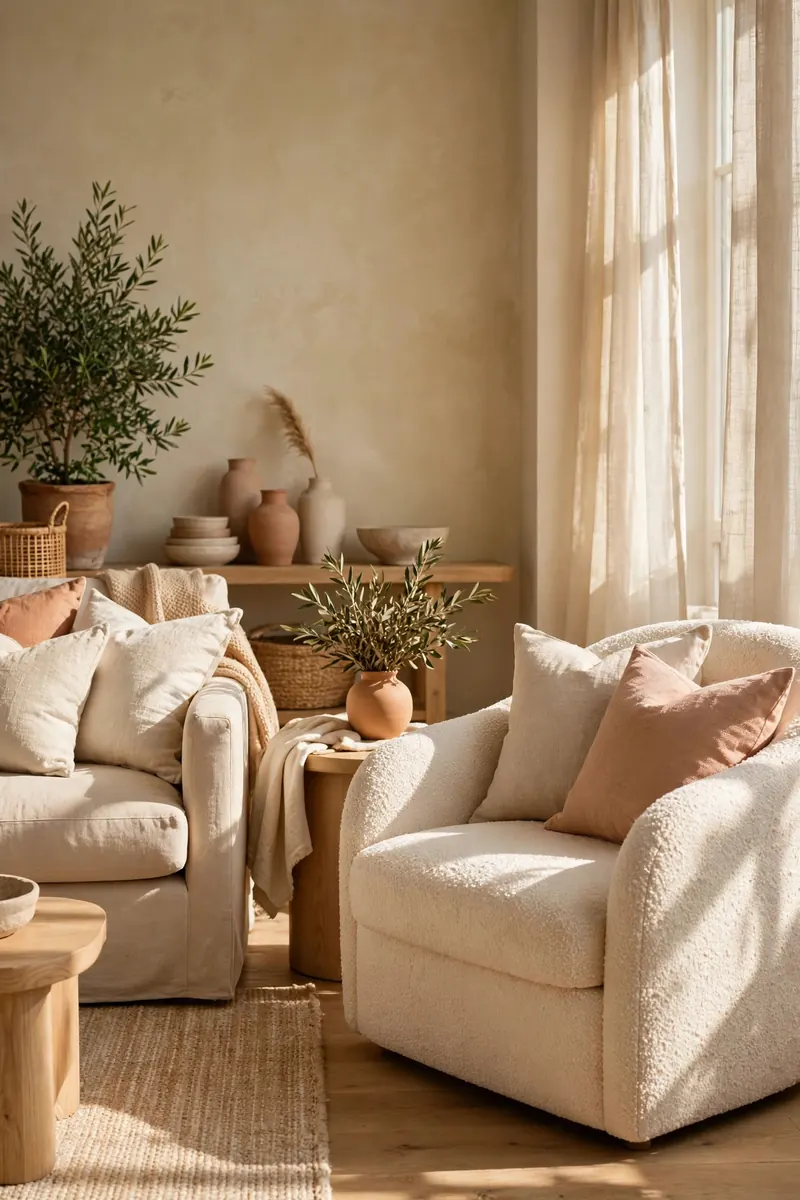
<!-- PINTEREST HERO IMAGE: Vertical 1000x1500 bright rental apartment living room with a peel-and-stick wallpaper accent wall, gallery frames on adhesive strips, layered rugs, bold text overlay "16 Renter-Friendly Decor Ideas" -->
Renting is not a reason for blank walls
There's a special kind of resignation that comes with renting: the beige walls, the builder-grade light fixtures, the mysterious holes from the last tenant that you're now responsible for. Most renters respond by doing nothing — living for years in a space that never feels like theirs because "it's not worth it for a rental."
That logic costs more than it saves. You live there every day; the apartment you come home to shapes your mood, your work, your willingness to host friends. And nearly everything that makes a space feel designed — color, texture, light, art — can be done without touching the landlord's property. These sixteen ideas use zero drills, zero permanent changes, and zero paint on walls you don't own. Every one of them comes out cleanly when you move.
> *Affiliate disclosure: Roomora is reader-supported. When you buy through links on this page, we may earn an affiliate commission at no extra cost to you.*
The renter's ground rules (read this first)
1. Read your lease before you decorate
This isn't the fun part, but it's the part that protects your deposit. Most leases address: nails and wall anchors (some allow small nail holes, many don't), painting (usually prohibited or "return to original color"), adhesive products (some leases specifically ban them), and alterations to fixtures, blinds, or hardware. Know your specific rules before you buy anything.
The golden standard: if you can't reverse it in under an hour with no trace, get written permission first. Email beats verbal — a "sure, go ahead" text from your landlord is worth more than a memory of a phone call when move-out inspection arrives. Keep that permission saved.
2. Photograph everything on move-in day
Before a single box is unpacked, photograph every wall, floor, fixture, and appliance — close-ups of existing scuffs, nail holes, and wear. Email the photos to yourself (or your landlord) so they're timestamped. This thirty-minute habit is the single best deposit-protection move a renter can make, because move-out disputes are almost always about pre-existing damage with no proof.
Walls without damage
3. Peel-and-stick wallpaper for one accent wall
Removable wallpaper is the highest-impact renter upgrade available: one accent wall transforms a room's entire personality in an afternoon, and quality peel-and-stick products remove cleanly for years. Start with the wall behind the bed or sofa — the wall your eye lands on — rather than papering whole rooms.
Test first: apply a sample swatch in an inconspicuous spot, leave it a month, then remove it to check for residue or paint pull. Older paint and fresh paint (under about 30 days cured) are the two surfaces most likely to have issues. Smooth, clean walls work best; heavily textured walls defeat the adhesive.
4. Hang art with adhesive strips and hooks — correctly
Adhesive picture-hanging strips work beautifully when you follow the instructions most people skip: clean the wall with rubbing alcohol first, press the strip firmly for a full 30 seconds, and — critically — wait the full cure time (usually an hour) before hanging the frame. Most "adhesive strips don't work" stories are really "I hung it after five minutes" stories.
Respect weight limits honestly: strips are rated per set, and large frames need multiple sets. For anything over about 7 pounds, use adhesive hooks rated for the weight or reconsider the placement. And check your lease — a small minority of leases restrict even adhesive products.
5. Lean large art instead of hanging it
The simplest renter wall trick requires no adhesive at all: lean oversized frames on the mantel, the dresser, the floor against the wall. Leaning art looks intentional and gallery-like at large scales, costs nothing in wall damage, and rearranges in seconds. Layer two or three pieces at different heights for a curated feel. This works especially well in small bedrooms where wall space is limited but floor-leaning art adds depth.
6. Use tension rods for curtains — and more
Tension rods need no brackets and no holes: mount curtains inside window frames, hang a fabric room divider in a studio, or create a closet curtain where doors are missing. For curtains, mount the rod as high and wide as the frame allows — curtains hung high make ceilings look taller and windows look larger, the oldest visual trick in decorating.
Choose rods rated for the curtain weight plus a margin; heavy blackout curtains on a cheap rod will sag and eventually slip. Twist-to-lock rods hold better than spring-only versions.
Light, textiles, and the five-minute wins
7. Swap the light fixtures (and keep the originals)
Ugly boob lights and bare bulbs define rental ceilings. Most are held by two or three wire nuts and a mounting bracket — a genuinely simple swap if you're comfortable with basic electrical safety (breaker off, tester to confirm, photo the wiring before disconnecting). Store every original part in a labeled box so reinstallation at move-out takes twenty minutes.
If electrical work is outside your comfort zone — completely fair — skip to plug-in solutions: arc floor lamps, plug-in wall sconces with cord covers, and plug-in pendant lights that hang from adhesive ceiling hooks. Never attempt electrical work your lease prohibits, and when in doubt, hire a handyman for the hour. For more weekend-level upgrades, see our beginner DIY projects.
8. Layer rugs to define zones and hide floors
Rental flooring — gray vinyl plank, tired carpet, beige tile — is usually the hardest thing to change and the easiest to cover. A large area rug (or two layered rugs) defines the living zone, adds color and texture, and protects the floor underneath, which your deposit will thank you for. In studios and open layouts, rugs are also the primary tool for visually separating "rooms"; pair this with the zoning ideas in our small apartment furniture guide.
Use rug pads: they prevent slipping, add cushioning, and protect both the rug and the floor. For carpeted rentals, low-profile pads designed for rug-on-carpet stop the bunching and tripping.
9. Upgrade textiles: curtains, bedding, throw pillows
Textiles are the fastest personality transplant a rental can get. Floor-length curtains (hung high and wide, per idea 6) soften hard rental edges; a proper duvet cover and layered throw pillows make the bedroom feel designed rather than temporary. These are also the most portable investments you own — every curtain, pillow, and throw moves with you to the next place.
Pick a simple palette: one neutral base, one accent color, one pattern. Rental rooms look chaotic when every textile is a different color story; restraint reads as design.
10. Add plug-in lighting everywhere it matters
Rentals are chronically under-lit: one harsh ceiling fixture per room, no task lighting, no warmth. The fix is entirely plug-in: warm-bulb floor lamps in dark corners, LED strip lights under kitchen cabinets (adhesive-backed, removable), battery-powered puck lights inside dark closets, and a proper bedside lamp instead of the overhead. Aim for three light sources per room at different heights — it's the difference between "apartment" and "home."
Smart bulbs in existing fixtures are another zero-install win: warm dimming, schedules, and color control without touching wiring.
Furniture and layout moves
11. Choose furniture that earns its footprint
In a rental — especially a small one — every piece should justify its floor space. Storage ottomans (seating plus hidden storage), drop-leaf or extendable tables, nesting side tables, and beds with built-in drawers all serve double duty. When you eventually move, modular and multi-use pieces adapt to unknown future floor plans better than single-purpose statement pieces.
Measure doorways, stairwells, and elevator dimensions before buying anything large. The classic renter heartbreak is a sofa that can't make the turn on the stairs. Keep those measurements in your phone next to your wall measurements.
12. Create zones in open layouts with freestanding pieces
Studios and open-plan rentals feel like one big room until you divide them visually: an open bookshelf as a room divider (accessible from both sides, no wall needed), a sofa with its back to the sleeping area, a rug under the "dining room." Freestanding dividers define space without a single screw — and they move with you. Our small balcony ideas use the same zoning logic outdoors.
13. Style the surfaces you already have
Rental kitchens and bathrooms usually can't be renovated, but they can be styled: a tray corralling soap and a small plant on the bathroom counter, matching canisters on the kitchen counter, a runner rug in a galley kitchen. These surfaces are where rentals feel most "temporary" — a few intentional objects signal that someone lives here on purpose. For the bathroom specifically, our small bathroom storage ideas cover renter-safe upgrades in detail.
The details that make it yours
14. Swap cabinet hardware (keep the originals bagged)
Kitchen and bathroom cabinet knobs are often the cheapest-looking thing in a rental, and swapping them is fully reversible: unscrew, replace, bag and label every original knob and screw for move-out. New hardware — matte black, brass, ceramic — changes the whole feel of a kitchen for very little money. Check that the new knobs fit the existing hole spacing before buying; measure center-to-center distance.
One caution: some landlords consider hardware changes an alteration. It's reversible in minutes, but if your lease is strict, a quick permission email costs nothing.
15. Bring in plants — the living decor
Plants do what no object can: they make a rental feel alive and settled. Start with forgiving varieties if you're new to plant care, group them in odd numbers, and use them to fill the awkward corners rentals always have. Hanging planters on tension rods or freestanding plant stands keep plants off damage-prone sills. Even one large plant in an empty corner changes a room's energy completely.
16. Do a move-out rehearsal once a year
Once a year, walk your apartment with fresh eyes and ask: what would I need to reverse? Test-remove one adhesive strip, check behind the peel-and-stick wallpaper edge, confirm the original light fixture parts are all still in their box. Catching a problem at month eight — when you can fix it calmly — beats discovering it during the move-out scramble. Photograph the current condition annually and keep the photos with your move-in set.
Frequently asked questions
Will peel-and-stick wallpaper damage my walls?
On properly cured paint (older than about 30 days) and smooth walls, quality removable wallpaper comes off cleanly — but "quality" and "properly cured" do real work in that sentence. Always test a sample for a month first, avoid applying over fresh paint, and remove slowly at a low angle with gentle heat from a hair dryer if edges resist. Textured walls are the main risk case.
Can my landlord forbid adhesive hooks and strips?
They can if the lease says so — some leases restrict "adhesives" generally. Read your lease's alteration clause literally. In practice, most landlords care about damage, not method; strips that remove cleanly rarely cause disputes. When in doubt, ask in writing before covering a wall.
What's the safest way to hang heavy items as a renter?
Honestly assess: adhesive strips top out around 7 pounds per set, and heavy mirrors or large art exceed that quickly. For heavy pieces, lean them on furniture or the floor (idea 5), use multiple high-rated adhesive hooks distributed across the frame, or ask your landlord for written permission to use proper anchors — many will agree if you offer to fill and touch up at move-out.
How do I get my full security deposit back?
Document move-in condition with timestamped photos, follow the lease's alteration rules literally, get permissions in writing, reverse every change before the final walkthrough (patch small holes, remove all adhesive residue, reinstall original fixtures and hardware), and clean thoroughly — cleaning disputes are the most common deposit deduction. Do a move-out rehearsal (idea 16) well before moving day.
Are tension rods strong enough for blackout curtains?
Quality twist-to-lock tension rods handle medium-weight curtains fine; heavy blackout curtains need rods specifically rated for the weight, mounted with maximum tension and ideally with non-slip end caps. For very heavy drapes in a wide window, consider a freestanding garment rack as a curtain holder instead — zero wall contact at all.
Should I paint a rental if the landlord says I can?
Only with written permission that specifies the terms — usually "return to original color at move-out" or "approved colors only." Get the exact original paint color name if you must repaint later (ask the landlord or property manager now, not at move-out). And budget the repaint into your moving costs: it's real work and real paint money.
Keep going
Renter-friendly thinking extends to every room. Take the same no-damage approach to your living room on a budget and your outdoor space with small balcony ideas. And when you're ready for projects that need a drill — at a place you own — our weekend DIY projects are waiting.
Get the Sunday reset: one practical home idea in your inbox every week — subscribe free here. No spam, ever.
Pin title ideas
- 16 Renter-Friendly Decor Ideas (Zero Drills, Zero Damage)
- Renting? You Can Still Have Beautiful Walls — Here's How
- 16 Apartment Upgrades That Won't Cost Your Deposit
- No-Drill Decor: 16 Ideas for Rental Apartments
- Renter-Friendly Decor Ideas That Look Anything But Temporary