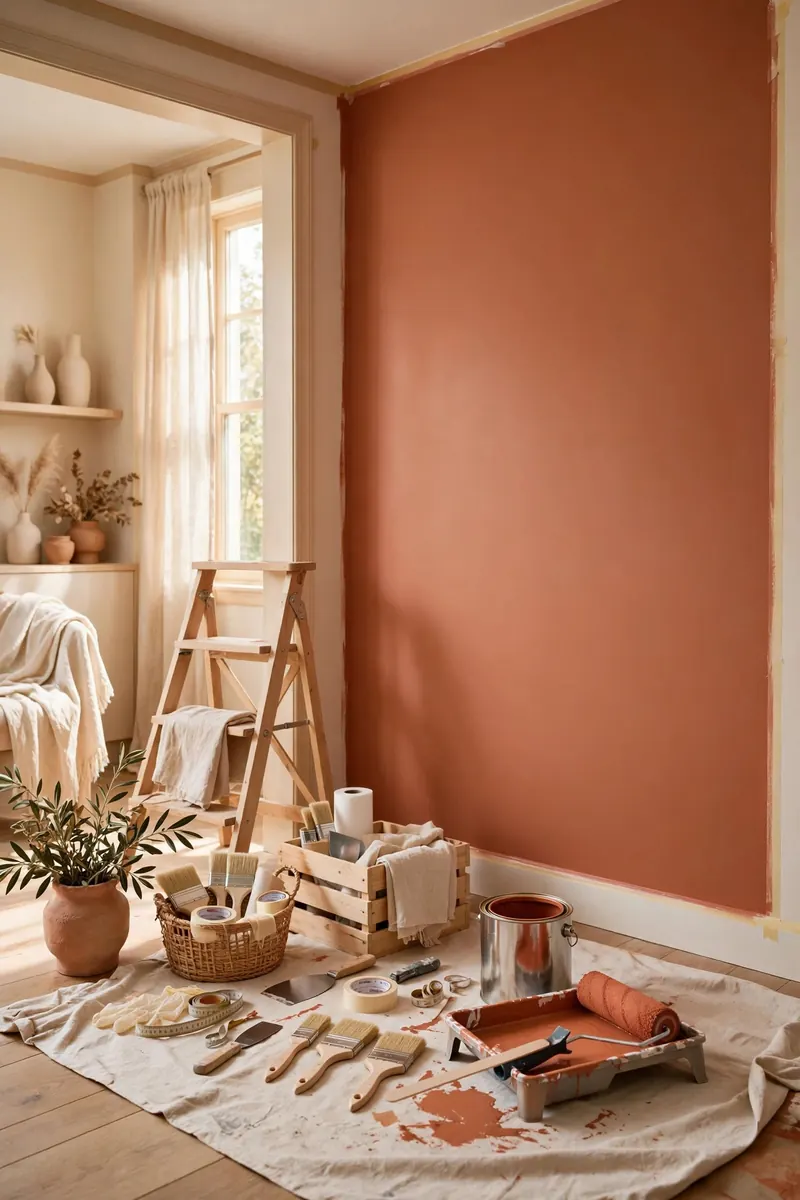
Start where you are
You don't need a workshop, power tools, or experience to start DIY. You need one free weekend, basic hand tools, and a project matched to your skill level. The projects below are ordered easiest-first. Each one teaches a skill you'll reuse forever — measuring, painting, mounting, caulking — while visibly improving your home.
A note on safety: these are all beginner-safe projects, but keep it that way. If a project ever involves electrical wiring, gas lines, plumbing behind walls, or structural changes, that's a job for a licensed professional, not a weekend. When in doubt, stop and call someone qualified.
Your starter toolkit
Before the projects: you need a tape measure, a level, a hammer, a set of screwdrivers, an adjustable wrench, a utility knife, painter's tape, and a cordless drill (the one power tool worth owning early). A stud finder costs under $20 and prevents the most common beginner disaster — mounting heavy things into drywall alone. Total investment: well under $150, and it pays for itself on the first project.
Saturday morning projects (under 2 hours)
1. Replace cabinet hardware
Unscrew old knobs and pulls, screw on new ones. That's it — and kitchens and bathrooms look updated instantly. Bring an old knob to the store to match the screw spacing. Budget $2–5 per piece; a kitchen runs $40–80 total.
2. Swap light switch and outlet covers
Yellowed plastic covers date a room. New white (or matte black) covers cost under a dollar each and take seconds to swap. Turn off the breaker first — even this simple job deserves that habit. If wiring looks damaged or unfamiliar, stop and call an electrician.
3. Caulk the bathroom
Old, cracked caulk around the tub and sink looks grimy no matter how clean the bathroom is. Cut out the old bead with a utility knife, clean the joint, and lay a smooth new bead of bathroom-grade silicone. Use painter's tape on both sides for crisp lines, and smooth with a wet finger.
4. Install a door draft stopper
Foam weatherstripping around a drafty door takes 20 minutes and cuts heating and cooling loss noticeably. Clean the frame, measure, cut, and press into place. Your energy bill will thank you.
Saturday afternoon projects (2–4 hours)
5. Paint an accent wall
One wall, one gallon, one afternoon. Move furniture to the center, tape edges, cut in with a brush, then roll. Two thin coats beat one thick coat every time. The skill — clean edges and even coverage — transfers to every future paint job.
6. Build floating shelves
Two or three floating shelves transform a blank wall into storage and display. The beginner version: pre-cut boards from the hardware store, hidden bracket hardware, a level, and a stud finder. Mount into studs wherever possible; use proper drywall anchors rated for the weight when you can't.
7. Upgrade your showerhead
Unscrew the old one (usually hand-tight plus a little wrench help), wrap the threads with plumber's tape, and screw on the new one. Ten minutes, no plumbing skills required. Keep the old one in case your lease requires it back.
8. Install curtain rods properly
Most rental curtains hang wrong — too low, too narrow. Patch old holes, then mount the rod 4–6 inches above the frame and 6–10 inches wider on each side. Use a level. This "project" is mostly about doing a simple thing correctly.
Sunday projects (half day)
9. Build a simple raised garden bed
Four boards, screws, and soil. A 4x4 foot cedar or pine bed is the classic starter: cut (or have the store cut) boards to length, screw corners together with exterior screws, level the ground, fill with soil. No advanced joinery — butt joints and screws are plenty strong for this.
10. Refinish a thrifted wood piece
Find a solid wood side table or chair. Sand with 120-grit then 220-grit, wipe clean, and apply two coats of paint or one coat of stain plus polyurethane. The transformation from "curb find" to "intentional decor" is the most satisfying feeling in beginner DIY.
11. Install peel-and-stick backsplash
Real tile is an intermediate skill; peel-and-stick tile is a beginner one. Clean the wall thoroughly, plan your layout from the center out, and press firmly. It won't fool a contractor up close, but at normal viewing distance it genuinely upgrades a kitchen.
12. Organize the garage or closet with a French cleat wall
A French cleat is just a board ripped at 45 degrees — one half screws to the wall, the other to whatever you're hanging. It holds remarkable weight and lets you rearrange hooks and shelves endlessly. Have the hardware store rip the board for you if you don't have a saw yet.
Skills each project teaches
Notice the pattern: hardware swaps teach measuring and screwdriving. Painting teaches prep and patience. Shelves teach leveling and anchoring. Caulking teaches finishing. After these twelve, you're no longer a beginner — you have the core skills for furniture assembly, wall mounting, basic repairs, and cosmetic upgrades throughout your home.
Mistakes beginners should avoid
13. Skipping prep
Eighty percent of a good paint job is taping, cleaning, and sanding. Eighty percent of a good caulk job is removing the old caulk. Prep feels like wasted time; it's the entire job.
14. Buying cheap tools twice
A $15 tape measure that bends and a $10 level that's wrong cost more than one good version of each. Buy the mid-range option once.
15. Eyeballing instead of measuring
"Looks straight" is never straight. The level and tape measure exist because human eyes lie. Measure twice, drill once — the cliché survives because it's true.
Frequently asked questions
What tools does a DIY beginner actually need?
Tape measure, level, hammer, screwdrivers, adjustable wrench, utility knife, painter's tape, stud finder, and a cordless drill. That's enough for every project on this list. Add tools per-project after that, not before.
What is the easiest first DIY project?
Replacing cabinet hardware or swapping outlet covers. Both take under an hour, need almost no tools, are nearly impossible to mess up, and produce a visible improvement that builds confidence for bigger projects.
When should I call a professional instead of DIY?
Anything involving electrical wiring beyond swapping a cover, gas lines, plumbing inside walls, roofing, or structural/load-bearing changes. Also call a pro if a project requires permits in your area. A good rule: cosmetic and surface-level is DIY; systems and structure are professional.
Keep going
DIY confidence grows fastest when you apply new skills to rooms you use daily. Our small bedroom ideas are full of beginner-friendly upgrades — floating nightstands, painted furniture, and renter-safe wall treatments.