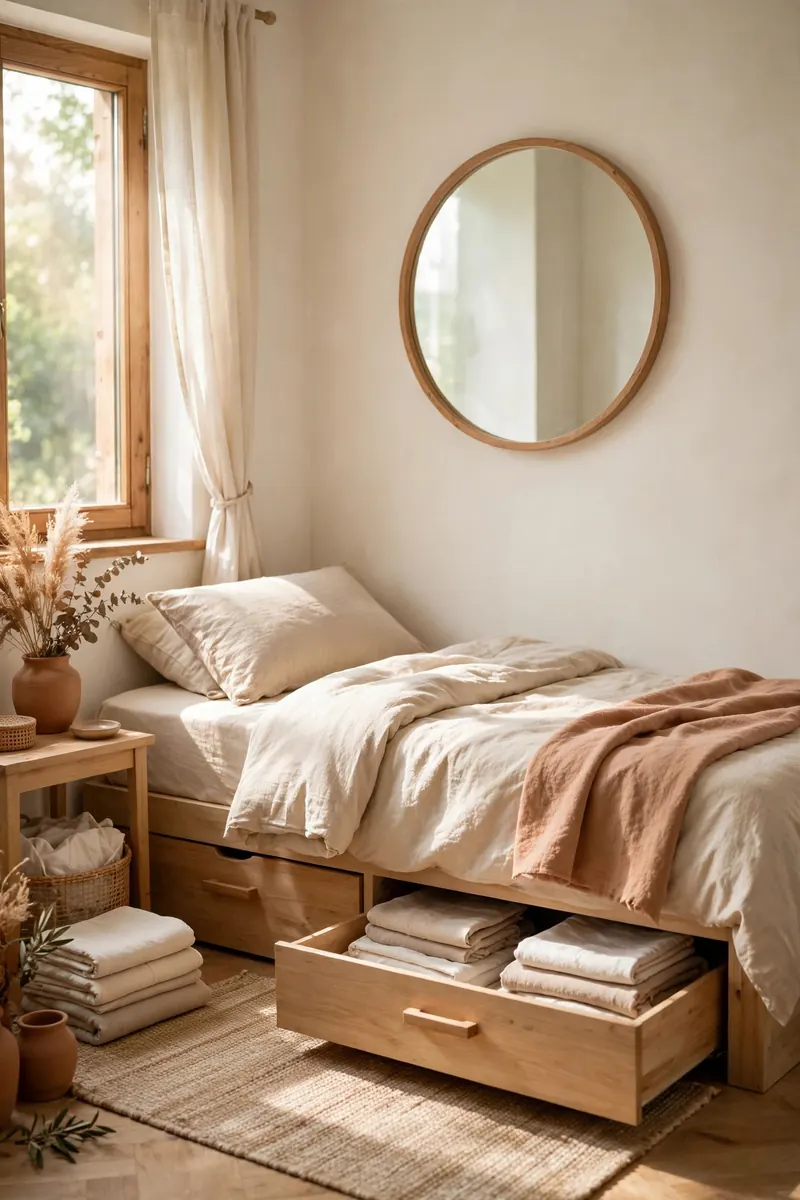
Why small bedrooms feel cramped (it's not just the size)
Most small bedrooms feel tight because of three things: poor layout, wasted vertical space, and visual clutter. The actual square footage matters less than people think — a well-organized 10x10 room feels bigger than a chaotic 12x12. Fix those three problems, and even the tiniest bedroom can feel open, calm, and genuinely pleasant to be in.
These 21 ideas are organized from highest impact to finishing touches: layout first (free), then storage (the real space multiplier), then visual tricks, renter-friendly upgrades, and budget wins. Start at the top and work down — most people see a dramatic difference before they spend a dollar.
Layout ideas that create space
Layout is free and it's the highest-leverage change you can make. Before buying anything, spend an hour trying different arrangements.
1. Float the bed off the wall
Pushing the bed into a corner wastes the hardest-to-reach corner — it becomes a dead zone where pillows fall and dust collects. Center the bed on the longest wall when possible so both sides are usable. This also makes the bed the visual anchor of the room, which paradoxically makes the space feel more intentional and larger.
If the room is truly narrow and centering isn't possible, push the bed against the wall but choose the wall that leaves the longest clear walkway. The goal is always: maximize usable floor, minimize dead corners.
2. Use floating nightstands
Wall-mounted shelves or small floating nightstands free up floor space and make cleaning easier — no legs to vacuum around, no bulky furniture eating square footage. A 12-inch floating shelf on each side of the bed holds a lamp, book, and glass of water, which is all a nightstand needs to do.
For ultra-tight rooms, a single floating shelf on one side is enough. The other side can use a wall-mounted sconce instead of a lamp, eliminating the need for a surface entirely.
3. Think in zones
In a studio or multipurpose room, use a rug or open shelving to visually separate sleep from work. The brain reads distinct zones as distinct spaces — a 400-square-foot studio with clear zones feels larger than the same space as one undifferentiated room. A rug under the bed defines the sleep zone; a bookshelf perpendicular to the wall creates a visual divider without blocking light.
4. Go vertical
Floor space is limited; wall space usually isn't. Tall dressers, over-door organizers, and high shelves add storage without shrinking the room's footprint. A good rule: if you're not using the wall space above 5 feet, you're wasting roughly a third of the room's storage potential. High shelves for off-season items, tall narrow dressers instead of wide short ones, hooks on every usable wall section.
5. Leave breathing room around the bed
Crowding furniture against the bed makes the whole room feel smaller, even if the furniture is necessary. Aim for at least 24 inches of clear walking space on the main side of the bed, and don't push dressers flush against the foot of the bed unless there's truly no alternative. A few inches of visible floor around furniture creates the visual breathing room that reads as spaciousness.
Storage ideas for tiny bedrooms
Storage is where small bedrooms are won or lost. Every item needs a home, or it becomes visual clutter that shrinks the room.
6. Choose a storage bed
Beds with built-in drawers replace an entire dresser — that's potentially 6-8 cubic feet of storage that was previously just empty air under the mattress. Ottoman-style lift-up beds offer even more hidden space: the entire under-bed area becomes one large compartment, ideal for off-season clothes, luggage, and bedding.
When choosing, consider drawer beds for daily-access items (clothes, pajamas) and lift-up ottoman beds for less-frequent access (seasonal storage, keepsakes). Drawer beds need clearance on the sides to open; ottoman beds need clearance above to lift. Measure your room for whichever mechanism you choose.
7. Maximize under-bed storage
If a storage bed isn't in the budget, rolling bins, vacuum bags for off-season clothes, and low-profile drawers turn dead space into a closet extension. Vacuum bags are the highest-density option — they compress bulky winter coats and spare bedding to a fraction of their volume. Rolling bins work best for items you access regularly since they slide out easily.
Keep under-bed storage shallow (under 7 inches tall for most bed frames) and labeled or transparent so you can find things without pulling everything out. A bed skirt hides it all for a clean look.
8. Over-door organizers
The back of the bedroom door is prime real estate — roughly 20 square feet of vertical space doing nothing. Over-door shoe organizers work for far more than shoes: accessories, scarves, cleaning supplies, gift wrap, electronics cables. Choose fabric organizers with clear pockets so contents stay visible.
9. Upgrade the closet
Most closets waste half their space. Double hanging rods instantly double hanging capacity — one rod at standard height, one halfway down for shirts and folded pants. Shelf dividers keep stacks of sweaters and jeans from toppling. Slim velvet hangers take up half the width of plastic ones, fitting more clothes in the same rod length.
Don't ignore the closet floor (shoe racks or bins), the back of the closet door (hooks for bags and robes), or the shelf above the rod (bins for off-season items). A $30 investment in rods and dividers can double usable closet space.
10. Use the space above the door
The wall above the bedroom door is almost always empty — and it's perfect for a shallow shelf holding off-season items, luggage, or decorative storage boxes. It's out of the sightline, doesn't affect the room's feel, and reclaims space that was purely decorative (empty wall) as functional.
Visual tricks that make rooms feel bigger
These don't add a single square foot, but they change how the brain perceives the space.
11. Hang mirrors strategically
A large mirror opposite a window bounces light and visually doubles the room — it literally shows you twice the space. Floor-length leaning mirrors work without mounting (great for renters). Mirrored closet doors serve double duty. The key placement: opposite or adjacent to the main light source, never facing a cluttered wall (it'll just double the clutter).
12. Choose light, warm colors
Soft whites, warm beiges, and pale sage make walls recede visually. Keep the ceiling bright white — a white ceiling feels higher than a colored one, always. This doesn't mean the room must be boring: texture (linen bedding, woven baskets, wood tones) adds warmth without the visual weight of dark colors or busy patterns.
13. Hang curtains high and wide
Mount curtain rods near the ceiling (4-6 inches below) and extend them 6-10 inches past the window frame on each side. Windows look dramatically larger, ceilings look higher, and more light enters because the curtains stack clear of the glass when open. This single trick has more visual impact per dollar than almost anything else in this list.
14. Keep patterns small and few
One subtle pattern (bedding or rug) is enough. Too many competing prints chop up the space visually — the eye reads each pattern boundary as a room boundary, making the space feel fragmented and smaller. If you love pattern, commit to one: patterned duvet with solid everything else, or a patterned rug with solid bedding.
15. Let in the light
Sheer curtains, clean windows, and layered lighting (overhead + bedside + accent) prevent the cave effect that makes small rooms feel oppressive. During the day, maximize natural light — it's the most flattering and space-expanding light there is. At night, multiple warm light sources at different heights (not one harsh overhead) make the room feel larger and more inviting.
16. Choose furniture with legs
Furniture that sits directly on the floor (blocky dressers, platform beds without clearance) creates visual weight that anchors the room down. Pieces with visible legs — mid-century style dressers, beds with 6+ inches of clearance — let light and sightlines pass underneath, making the floor area feel continuous and larger. This applies to nightstands, dressers, and even upholstered chairs.
Renter-friendly upgrades
You don't need to own the walls to transform them.
17. Peel-and-stick wallpaper
One accent wall adds personality with zero paint and zero deposit risk. Modern peel-and-stick papers look genuinely good (not the plasticky stuff of a decade ago) and remove cleanly with heat from a hair dryer. Behind the bed is the classic placement — it creates a headboard-like focal point without any furniture.
18. No-drill shelving
Adhesive strips and tension rods handle lightweight shelves, curtains, and organizers without holes. Modern adhesive technology holds several pounds per strip when applied correctly (clean surface, firm press, full cure time). Floating shelves for books and decor, adhesive hooks for bags and robes, tension rods for curtains — all removable.
19. Removable wall decals
Arches, lines, or botanical prints add design interest renters can take down in minutes. Large-scale decals (an arch behind the bed, a botanical mural on one wall) have outsized impact for the effort — they read as intentional design, not temporary fix.
Budget ideas under $100
20. Declutter first — it's free
Remove everything that doesn't belong in a bedroom. Clothes that live on "the chair," books you'll never reread, the box you haven't opened since moving in. Visual calm is the cheapest upgrade there is, and no storage solution works until the excess is gone. Be ruthless: if you haven't used it in a year and it has no sentimental value, it goes.
21. Matching hangers and bins
Uniform storage looks instantly more expensive and organized. Ten matching velvet hangers cost less than a takeout dinner and make any closet look intentional. Matching bins on shelves turn visual chaos into calm rhythm. It's the cheapest design upgrade in this entire list.
22. A new duvet cover
The bed dominates a small room — it's typically the largest single object, occupying a third of the floor space. Fresh bedding in a light, cohesive color transforms the whole space for under $50. It's the highest visual-impact-per-dollar purchase for any bedroom.
23. LED strip lighting
Behind the headboard or under floating shelves, warm LED strips (2700K, not cool white) add depth and coziness. They create the layered lighting that makes small rooms feel designed rather than merely functional. Battery-operated options need no wiring; plug-in versions with remotes offer dimming.
Mistakes to avoid
24. Don't block natural light
Keep window areas clear. Heavy furniture in front of windows shrinks the room visually and literally — it blocks the light that makes small spaces feel open and forces the eye to stop at the furniture instead of traveling to the outdoors. If the bed must go near a window, keep the sill clear and use sheer curtains.
25. Don't buy furniture before measuring
The most expensive small-bedroom mistake is furniture that almost fits. Measure the room, measure doorways and stairwells for delivery, and tape out furniture footprints on the floor with painter's tape before buying. A dresser that's 2 inches too deep can block a walkway; a bed frame that's 4 inches too long can make the room unusable.
Frequently asked questions
What size bed is best for a small bedroom?
A full or queen works in most small bedrooms if you keep other furniture minimal. Measure first — leave at least 24 inches of walking space on the main side. In very tight rooms (under 100 square feet), a full bed with excellent under-bed storage often works better than a cramped queen.
How should I arrange furniture in a tiny bedroom?
Put the largest piece (the bed) first, against the longest wall. Then add storage vertically before adding floor-standing pieces. Every additional piece of floor furniture should earn its place — if it doesn't store something or serve daily use, it probably doesn't belong.
What colors make a small bedroom look bigger?
Light, warm neutrals — soft white, warm beige, pale gray, light sage. Dark colors can work as a single accent wall but keep the main surfaces light. The ceiling should always be the lightest surface in the room.
How can I make a small bedroom cozy without cluttering it?
Texture over objects: linen bedding, a woven throw, a soft rug, warm lighting. Coziness comes from tactile richness, not from more things. Four textural elements beat forty decorative objects every time.
The bottom line
Small bedrooms reward smart choices, not big spending. Start with layout (free), declutter ruthlessly (free), add vertical storage, then layer in light and color. The room will feel twice as big before you've spent $100.
Keep going
Bedrooms are just the start. The storage principles here — vertical space, hidden compartments, zones — also power our small bathroom storage ideas.