The small-space work problem
Working from home in a small space usually means one of two bad options: the kitchen table (where work spreads across the eating area and never quite goes away) or the bedroom (where the laptop lives three feet from the pillow and neither work nor sleep gets a boundary). Both bleed into the rest of life. You need a workspace — not a room, just a zone — where work happens and then stops.
A functional home office needs surprisingly little: a work surface at the right height, a chair that doesn't hurt, decent light, and a way to close it off — physically or visually — when the day ends. These twenty ideas build that from closets, corners, walls, and underused square footage. Most cost under $100, and several cost nothing but rearranging.
The closet office: the classic small-space move
The "cloffice" (closet + office) is popular for a reason: closets have doors. When work ends, you close the door and work disappears. Here's how to do it right.
1. Convert a reach-in closet into a desk nook
Remove the closet doors (or leave them open during work hours), install a desk-height shelf or a freestanding narrow desk inside, and add lighting. A standard reach-in closet is 24 inches deep — plenty for a laptop, monitor, and keyboard. The hanging rod above becomes shelf space for supplies. Keep the doors if you can: closing them at 6pm is the single best work-life boundary a small space offers.
2. Light the cloffice properly
Closets are dark, and bad lighting causes eye strain and headaches within weeks. Add an LED strip under the top shelf, a clip-on desk lamp, or battery-powered puck lights — don't rely on the room's overhead light, which your body blocks when you sit in the closet. Daylight-spectrum bulbs (5000-6500K) reduce afternoon fatigue compared to warm bulbs. This is the most-skipped step in closet offices and the one people regret skipping.
3. Ventilate and manage cables in enclosed spaces
A closed closet with a running laptop gets warm. Leave the doors open while working, or at minimum cracked — don't seal yourself in. Run a single power strip into the closet and mount it under the desk surface so cables drop behind, not across the floor. A cable tray or even a simple adhesive cable channel keeps the 24-inch-deep space from feeling like a server room.
Corner desks: claim the dead zones
Corners are the most wasted space in small rooms. A corner desk turns dead square footage into a full workstation.
4. Use an L-shaped or corner desk unit
An L-shaped desk fits into a corner and gives you roughly 40% more surface than a straight desk in the same wall length — the corner itself becomes usable instead of dead. One arm holds the monitor and keyboard; the other holds papers, a printer, or a second screen. In bedrooms, tuck it into the corner farthest from the bed to maximize the psychological separation between work and sleep.
5. Build a floating corner desk from two shelves
Two wall-mounted shelf brackets and a pair of sturdy shelves create a corner desk for a fraction of furniture-store prices. Mount at standard desk height (28-30 inches) and ensure brackets hit wall studs — a desk that sags under a monitor is worse than no desk. The floating design keeps floor space clear, which makes small rooms feel larger and makes cleaning underneath trivial.
6. Angle the desk for natural light
Position the desk so natural light comes from the side, not from directly behind or in front of the screen. Behind you causes glare on the screen for video calls; directly in front causes squinting. Side light is the sweet spot — it illuminates your face evenly for calls and doesn't fight the monitor. In the northern hemisphere, a north-facing window gives the most consistent light without harsh direct sun.
Wall-mounted and fold-away: the disappearing office
The best small-space office is one that vanishes when work ends. These do.
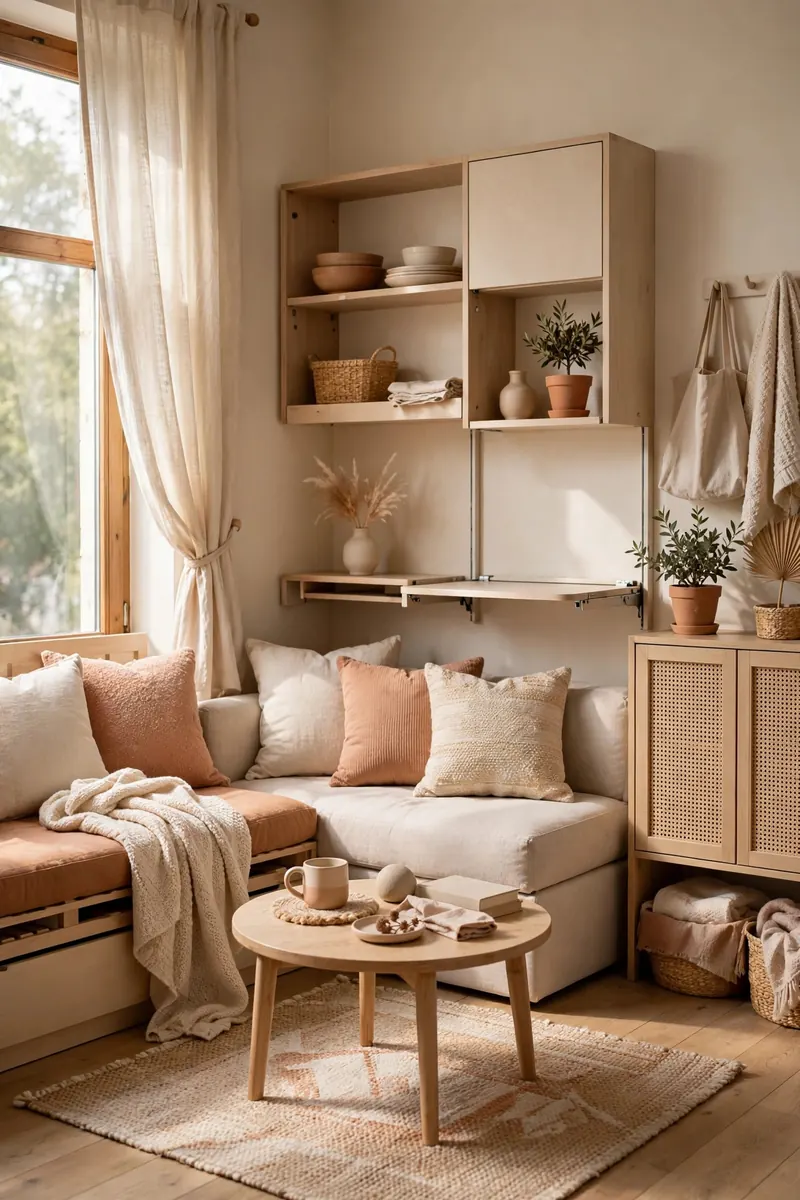
7. Install a fold-down wall desk
A wall-mounted drop-leaf desk folds flat against the wall when not in use — zero footprint during non-work hours. Open it for the workday, close it for dinner. Choose one with built-in shelving or cubbies above so supplies have a home when the desk is folded. Mount into studs; a loaded fold-down desk pulls significant weight away from the wall. This is the top pick for studio flats where the office shares space with the living room.
8. Try a secretary desk or laptop armoire
A secretary desk (drop-front desk) or a small armoire converted to office use closes completely — doors shut, work gone. Inside: a work surface, shelves for supplies, and often a light. From the outside it's furniture; open it and it's an office. Secondhand secretary desks are common and inexpensive, and they suit traditional decor better than modern wall-mounted units. The psychological "closing up shop" ritual matters more than people expect.
9. Use a rolling cart as a mobile office
A three-tier rolling cart holds laptop, notebooks, chargers, and supplies — wheel it to the table to work, wheel it to a closet to store. This is the lowest-commitment home office: no mounting, no furniture, works in any room. It's ideal for people who work in different spots (kitchen table mornings, sofa afternoons) or who need the dining table clear by evening. The cart is the office; the table is just a surface.
Apartment workspaces: work where you live
10. Zone the office with a rug and lighting
In open-plan apartments, the office needs a visual boundary or work spreads everywhere. A rug under the desk area plus a dedicated desk lamp creates a "room within a room" — your brain learns that the rug means work and off the rug means home. This sounds minor; in practice it's the difference between feeling like you have an office and feeling like you live at work.
11. Face the desk toward the room, not the wall
The default is pushing the desk against the wall, facing the wall — which feels like a cubicle penalty box. If space allows, float the desk facing into the room (even just 18 inches from the wall). You see the room instead of drywall, video call backgrounds look better (room depth beats flat wall), and the space behind the desk becomes usable. This one change makes small offices feel significantly less cramped.
12. Use a room divider for visual separation
A folding screen, open bookshelf, or curtain on a tension rod between the desk and the living area creates a real boundary. An open bookshelf is the best option — it divides the space while adding storage, and you can see through it enough that the room doesn't feel chopped up. In a studio, this is often the difference between "I work in my bedroom" and "I have a home office."
13. Claim underused spaces: hallways, landings, nooks
The space under the stairs, a wide hallway landing, a deep window alcove — these fit a narrow desk and chair. Hallway offices work best for focused solo work (no video calls, ideally) since they're pass-through zones. Measure carefully: you need 30 inches of desk depth plus 24 inches of chair clearance. A nook with a window is actually premium office real estate — natural light and a view beat a dark bedroom corner every time.
The ergonomics non-negotiables
Small doesn't mean uncomfortable. These matter regardless of setup size.
14. Get the chair right before anything else
A bad chair causes back, neck, and shoulder pain within weeks of full-time home work — and no desk setup compensates for it. You don't need a $500 ergonomic chair, but you need lumbar support, adjustable height, and a seat depth that doesn't cut into the backs of your knees. If budget forces a choice between a nice desk and a decent chair, choose the chair every time. Your spine doesn't care how pretty the desk is.
15. Raise the monitor to eye level
Laptop hunch — head craned down at a screen 12 inches too low — is the most common home-office injury. A laptop stand plus external keyboard, or a monitor on a riser, brings the top of the screen to eye level. The 20-20-20 rule helps too: every 20 minutes, look at something 20 feet away for 20 seconds. These sound like office-wellness platitudes until your neck seizes up in month two.
16. Add task lighting even in bright rooms
Overhead room lighting creates screen glare and shadows on your work surface. A dedicated desk lamp with adjustable positioning eliminates both. It's also the visual signal that the workday has started (lamp on) and ended (lamp off) — a small ritual that helps small-space workers mentally clock out.
Budget setups that actually work
17. The $100 starter office
Narrow desk or wall shelf ($30-40), basic ergonomic-ish chair secondhand ($30-40), clip-on LED lamp ($15), laptop stand ($15). That's a complete, genuinely usable home office for around $100. Upgrade in order of impact: chair first, then monitor, then desk. Don't buy the aesthetic setup first and the comfortable chair "later" — later never comes and your back pays.
18. Shop secondhand for the big pieces
Desks and chairs are among the best secondhand furniture buys — they're durable, common, and depreciate fast. Office liquidations, university surplus sales, and local marketplaces routinely list solid wood desks and decent task chairs for a fraction of retail. In the UK, check Gumtree and Facebook Marketplace; in the US, Craigslist, OfferUp, and university surplus stores. Inspect chairs in person: sit, adjust, lean — mechanisms wear out before frames do.
19. Use what you own before buying
A dining chair with a cushion works for short workdays. A bookshelf on its side is a desk. The ironing board at standing height is a standing desk (seriously — it's height-adjustable and sturdy). Start with what you have, identify what's actually uncomfortable after two weeks, and buy only to fix real problems. Most "home office essentials" lists are shopping lists, not needs assessments.
Make it sustainable
20. Build the shutdown ritual
In a small space, work doesn't end when you close the laptop — it's still there, visible, calling. Build a 5-minute shutdown: close all tabs, write tomorrow's top three tasks, clear the desk surface, turn off the lamp, and — if you have doors or a fold-away desk — close them. The ritual tells your brain the workday is over even when the office is six feet from the sofa. Without it, small-space workers report the same complaint everywhere: "I never feel like I've stopped working."
More ideas you'll love
Frequently asked questions
What's the smallest space that can fit a home office?
A 24-inch-deep closet, a 30-inch-wide hallway nook, or a 4-foot section of wall for a fold-down desk. The functional minimum is a work surface at proper height, a chair, and light — roughly 10 square feet. Anything beyond that is comfort, not requirement.
How can I work from home in a studio apartment?
Use a fold-down wall desk or rolling cart so the office disappears after hours, zone it with a rug and lamp, and consider a room divider for visual separation. The key challenge in studios isn't space — it's boundaries. Anything that lets you "close" the office at day's end (doors, folding desk, curtain) protects your off-hours.
Is a closet office actually comfortable?
Yes, with proper lighting and ventilation. The two things people get wrong: relying on ambient room light (add dedicated lighting) and sealing the doors while working (leave them open for airflow). Done right, a cloffice is quiet, focused, and has the best work-life boundary of any small-space option — you literally close the door on work.
What's the best desk for a small bedroom office?
A narrow desk (under 20 inches deep) or wall-mounted shelf in the corner farthest from the bed, facing into the room rather than the wall. Keep the sleep zone and work zone visually separated — even a few feet of distance plus different lighting helps your brain switch modes.
How do I soundproof a small home office for calls?
You can't truly soundproof without construction, but you can meaningfully reduce noise: a rug and curtains absorb echo, a white noise machine masks household sounds, and a decent headset mic (even a $30 one) matters more than room treatment for how you sound to others. Close doors, warn housemates, and put a "on a call" sign up — social soundproofing beats acoustic panels.
Should I get a standing desk for a small space?
Only if you'll actually stand. A height-adjustable converter on a regular desk gives you the option without committing the footprint or cost of a full standing desk. Many people buy standing desks, use the standing feature for a week, and never touch it again. Test with an ironing board or stacked boxes first — if you stand consistently for two weeks, then invest.
Keep going
Small workspaces pair with small bedroom ideas — many home offices live in bedrooms, and the zoning principles are identical. Apply both and the whole room works harder.
Get the Sunday reset: one practical home idea in your inbox every week — subscribe free here. No spam, ever.