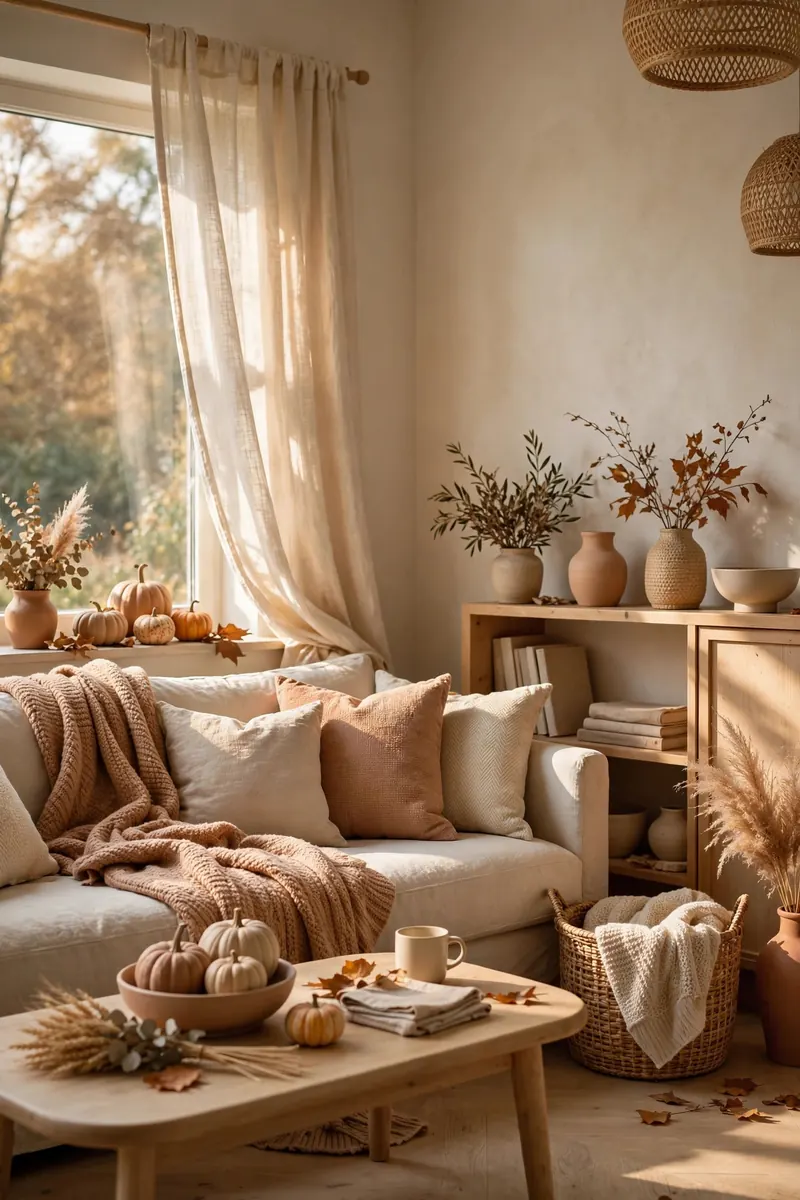
<!-- PINTEREST HERO IMAGE: Vertical 1000x1500 styled autumn front porch at dusk, pumpkins and mums flanking the door, lanterns glowing, bold text overlay "Fall Porch Ideas" -->
Make your porch the warmest welcome on the block
Your front porch is the first thing guests — and you — see every day from September through November, and it's the easiest "room" of the house to transform for the season. A few well-chosen swaps can take it from summer bare to full autumn warmth in a single afternoon. Fall decorating works outdoors because the season hands you a color palette for free: warm oranges, deep reds, golden yellows, and amber evening light that makes everything glow.
This guide gives you 14 practical fall front porch ideas, organized by what actually matters: your porch size, your budget, and how long you want the look to last. Expect real measurements, honest cost ranges, and the maintenance truths most articles skip — how long real pumpkins actually survive, which wreaths fall apart by Halloween, and how to keep everything from ending up in your neighbor's yard in the first big windstorm. These ideas pair beautifully with your fall home decor and organization ideas, so your entry feels intentional from the curb to the living room.
> *Affiliate disclosure: Roomora is reader-supported. When you buy through links on this page, we may earn an affiliate commission at no extra cost to you.*
Foundation: framing the door
1. Size your plan to your porch tier
Everything else depends on how much real estate you're working with. Porches roughly fall into four tiers, and each wants a different approach.
Tier 1 — Apartment doorstep (0–3 ft deep). Three items max: a layered doormat, one slim vertical accent (a narrow mum planter or a tied corn stalk bundle), and a wreath. Over-the-door wreath hangers leave zero marks, which matters for renter-friendly apartment decorating.
Tier 2 — Small stoop (3–6 ft deep). One feature cluster per side of the door: a medium mum planter on one side, a lantern-plus-pumpkin stack on the other. Keep a clear 3-foot path so guests and delivery drivers don't trip.
Tier 3 — Standard porch (6–10 ft deep). Time to layer: flank the door with two clusters per side, add a bench or chairs, and hang a swag from the porch posts. Work in odd numbers — groups of 3 or 5 pumpkins at varying heights look designed; matched pairs look formal.
Tier 4 — Wraparound (10+ ft deep). Divide into zones: entry (door, wreath, mats), seating (chairs, throws, side table), and one or two vignette zones (hay bale display, pumpkin tower). Zoning keeps a big porch from looking like a random collection of fall stuff.
Measure the depth from your door to the edge and the width between posts before buying anything. Most fall decor regret comes from scale mistakes — a wreath too small for a 4-foot door, or hay bales swallowing a 3-foot stoop.
2. Layer a doormat over an outdoor rug
This is the highest-impact, lowest-cost move on the list. A coir doormat layered over a patterned outdoor rug instantly reads as "designed." Use a flat outdoor rug as the base — 2x3 feet for a single door, 3x5 for a double — then center a standard 18x30-inch coir doormat on top, leaving 4 to 6 inches of rug visible on all sides.
Pick a rug in fall colors with some structure: buffalo check, stripes, or a simple geometric in orange, rust, black, or cream. Outdoor-grade polypropylene or recycled plastic rugs rinse clean and dry fast; the coir mat on top scrapes shoes while the rug does the visual work.
Cost reality: a basic outdoor rug runs $15–30 and a coir mat $10–20, so the layered look lands around $25–50 and survives multiple seasons. Next year, swap just the top mat for the season and keep the same base rug to halve the cost.
3. Pick a wreath built to survive fall
Not all wreaths last. Grapevine base wreaths (18–24 inches for a standard door; 24–28 inches for doors 42+ inches wide) are the workhorses — hot-glue or wire faux leaves and berries onto the woven base and refresh the attachments year after year. On a covered porch, expect 3–5 seasons; on a fully exposed door, about 2 before fading.
All-faux wreaths look most polished on day one and handle weather best, but cheap ones fade to a plasticky sheen within one sunny season. Buy dense, wired construction and plan on replacing every 2–3 years. Dried-natural wreaths (wheat, seed pods) are stunning but shortest-lived — one season, sometimes one good rainstorm — so save them for covered porches.
Store wreaths in a wreath bag or large box (not a trash bag — compression crushes the shape); our holiday decor storage ideas cover off-season storage that keeps shapes intact. Hang with an adjustable over-the-door hanger rather than nails if you rent, and center the wreath so its top sits roughly 55–60 inches from the porch floor.
The harvest core: pumpkins, mums, and texture
4. Place mums like a designer, not a nursery aisle
Mums are the fall flower, but identical plastic pots in a line look like you gave up. Use three tricks: grouping, height variation, and color restraint.
Buy garden mums (sold as hardy mums) if you want them to possibly survive winter in the ground — perennial in zones 5–9 if planted by early October and mulched. Florist mums, sold already in full bloom, are bred for display: 3–6 weeks of glory, then compost. Both run roughly $5–12 per pot. Keep mums in nursery pots slipped inside decorative planters, or repot into containers at least 12 inches wide — mums are thirsty and small pots dry out in a day. Water daily (sometimes twice in warm September), and deadhead spent blooms to push new buds.
For color, stick to 2–3 shades: rust + yellow, plum + cream, or all-white mums with orange pumpkins for contrast. On tiny doorsteps, a single 10-inch mum in a woven basket reads complete — the same one-pot trick works for small balcony fall displays.
5. Do the real vs. faux pumpkin math honestly
Real pumpkins win on price and authenticity: small sugar pumpkins $3–8 each, carving-size field pumpkins $8–15. Whole and uncut, they last 4–8 weeks on a cool porch (below 65°F days) but only 2–3 weeks in warm September weather; carved, expect 5–10 days. Wipe carved ones with diluted vinegar (1 part vinegar to 10 parts water) to slow mold. The downside: squirrels, chipmunks, and rot. If wildlife is aggressive where you live, real pumpkins become expensive squirrel feed — which is where faux earns its keep.
Faux pumpkins cost $8–25 each for convincing foam or resin versions — pricey upfront, but they last indefinitely and handle heat waves without sweating. The honest catch: cheap faux pumpkins look cheap, with a hollow plastic shine. Buy a few high-quality matte-finish foam pumpkins and mix them with real ones; nobody can tell the difference in a cluster.
The hybrid approach most decorators land on: real pumpkins for harvest season, plus 2–3 quality faux pumpkins as the permanent backbone you reuse every year. When the reals soften, compost them and let the fauxs carry the display into November.
6. Use hay bales and corn stalks with restraint
One small hay bale (roughly 18 x 14 x 36 inches, $8–15) is enough for most porches — two at most for a wraparound. Stack pumpkins on top to instantly gain 18 inches of height and create a focal point. Corn stalk bundles ($10–20 per bundle of 6–8 stalks) flank doors beautifully — tie them to posts or railings with twine or zip ties so they stand upright instead of splaying.
The weather truth: hay bales absorb water. On a covered porch they're fine all season; exposed, they start sagging after 2–3 weeks of rain. On an uncovered porch, either skip the bale or accept it as a 3-week decoration and compost it after. Straw bales behave slightly better than true hay. Give bales a shake before bringing them near the door (field pests hitchhike), and keep them a few feet from the entrance rather than directly underfoot.
7. Add texture with gourds, pinecones, and baskets
The difference between a good fall porch and a great one is texture variety — and it's the cheapest layer to add. Fill woven baskets ($8–20 at craft or thrift stores) with mixed gourds, tuck pinecones around pumpkin bases, and lean dried branches in a tall crock by the door.
Baskets are the workhorse container: warm, handmade-feeling, available in every size, and a few dollars at thrift stores. Line them with a plastic bag or burlap before adding damp moss or soil so moisture doesn't seep onto wood floors. Group items in threes at different heights — a tall basket of branches, a medium pumpkin stack, a low gourd bowl on a crate.
Light, comfort, and staying power
8. Light the porch for shorter days
By late October it's dark by 6 PM in much of the country, and a well-lit porch is safer and more inviting. You don't need an electrician — three easy options cover it.
Solar stake lights ($2–5 each) line the walkway, spaced 6–8 feet apart. Honest limitation: they need 4–6 hours of direct sun, so shaded north-facing entries get dim results. Buy warm white (2700–3000K) — never cool blue-white, unless you want your porch to look like a parking lot.
Battery or solar string lights are the fall essential. Warm-white fairy lights wrapped around railings, draped over a wreath, or stuffed inside a large glass lantern create the amber glow that defines autumn evenings. Get strands with a built-in timer (6 hours on, 18 off); 33 feet costs $8–15 and covers one railing section.
Lanterns with LED candles anchor the display at ground level. Flanking the door with two lanterns (18–24 inches tall for a standard entry) frames the doorway symmetrically. Use flameless LED candles inside — real candles in outdoor lanterns blow out constantly and are a fire concern near dried corn stalks. These same lantern and string-light tricks carry over to small backyard patio decorating. For existing fixtures, swap the bulb for a warm amber LED (2200K) during fall — a few dollars that makes the whole entry feel golden.
9. Make it cozy: throws, pillows, and seating touches
If your porch has seating — even one chair — fall is the season to dress it: one throw blanket, one or two weather-resistant pillows, and a small surface for a warm drink.
Acrylic-blend throws ($20–40) resist fading and wash easily. Real wool looks incredible but felts and shrinks if rained on, so only use it under a covered porch. Drape the throw over a chair arm or folded across a bench.
Pillows: standard indoor inserts mildew outdoors — use outdoor-rated covers (solution-dyed acrylic or olefin, $12–25 each) with inexpensive outdoor inserts. Plaid is the fall classic — a rust-and-navy or black-and-cream buffalo check pillow says autumn without a single pumpkin. Even outdoor fabrics last twice as long if they dry between storms, so bring pillows in during heavy rain.
The small surface: a $25–40 side table, a sturdy crate flipped upside down, or a large plant stand holds a lantern or a mug. It gives the seating zone purpose and the eye somewhere to rest.
10. Wind-proof and weather-proof everything
Fall means wind, and lightweight decor migrates. Run through this checklist once at setup and you'll stop chasing pumpkins down the driveway.
- Pumpkins: wedge small ones between larger ones instead of balancing them solo. For real security, run a wooden dowel through a stack of faux pumpkins into a heavy base pot.
- Wreaths: use a sturdy over-door hanger rated for the wreath's weight. Adhesive hooks fail in cold weather — the adhesive releases below about 40°F.
- Corn stalks: zip-tie or wire them to porch posts in at least two spots. Twine alone stretches and loosens.
- Lightweight pots: add 2–3 inches of gravel or sand at the bottom of every container before soil — drainage and ballast in one.
- Textiles: bring throws and pillows inside before predicted storms. Museum putty (a few dollars) under lantern bases keeps them from sliding on slick floors.
- Hay bales: on exposed porches, drape burlap over the top during rain — it sheds water and looks intentional.
Check the display weekly: pull any pumpkin that softens before it leaks, shake leaves out of baskets, and tighten anything the wind has worked loose. Ten minutes a week beats a full rebuild after a storm.
Budget it: three honest tiers
11. Three ways to spend: under $25, $25–75, and the splurge
Fall porch decor doesn't need a big budget — it needs to know where each dollar shows.
Under $25 — the refresh. Assumes you own basics from prior years: one seasonal coir doormat ($10–15) + 3–4 real pumpkins from a farm stand ($8–12). September thrift stores are goldmines for baskets and lanterns at $3–8 if you want to stretch the $25.
$25–75 — the full look. Add a grapevine wreath you dress yourself ($15–25 for the base, plus $10 of faux picks) + two pots of mums ($10–20) + a straw bale or corn stalk bundle ($10–15). This buys the complete layered entry — wreath, mats, pumpkins, mums, one texture element. Most porches never need more.
The splurge ($75–150+) — the anchor pieces. Spend on things that return for years: a pair of large quality lanterns ($30–50 each), a dense faux fall garland ($40–70), one really good wreath ($40–60). Splurge on structure, save on perishables — real pumpkins and mums look better fresh anyway.
Budget philosophy: the cheapest fall porch is the one you don't rebuild every year. A $60 grapevine wreath re-dressed for five seasons costs $12/year; a $25 dried wreath replaced annually costs $25/year. The same stretch-your-dollar thinking in our budget living room decor ideas applies indoors too.
12. Build height with crates, stools, and stands
Flat displays look flat. The pro trick is varying heights, and the cheapest way is stacking what you already own: wooden crates ($10–20 new, often free from produce markets), a sturdy step stool, an overturned bucket draped with burlap, or a plant stand.
A classic three-level cluster: a crate (18 inches) with two pumpkins on top, a medium lantern beside it on the floor (24 inches tall), and a low wide bowl of gourds in front. On porch steps, place one pumpkin per step, alternating sides as you descend — it draws the eye straight to your door.
Caution: crates left in rain warp and rot — bring wooden risers under cover during wet weeks, or use metal and resin stands for exposed spots. Height-layering is also one of the easiest beginner weekend DIY projects to practice indoors or out.
13. Plan the fall-to-winter transition now
The smartest decorators plan October and December at the same time. Decide in advance what survives into the holidays and what gets retired — it saves a frantic full teardown the week after Thanksgiving.
Keep: lanterns, the wreath base, crates, and string lights — swap fall attachments for evergreen. Retire: orange pumpkins and gourds (compost after Thanksgiving), hay bales, and seasonal doormats.
The bridge week: the week of Thanksgiving, pull the orange pumpkins but leave mums if still blooming, the lanterns, and the wreath base. Add one evergreen element — a small potted evergreen or a railing swag — and the porch reads "late fall" rather than "forgotten Halloween." For the winter layer, our small Christmas tree ideas include porch-sized options for a big planter by the door. Going spooky first? Our Halloween porch decor ideas layer perfectly onto this fall base.
14. Mind safety and realistic upkeep
A beautiful porch that blocks the door or rots the floorboards isn't worth it. Keep the walkway clear: at least 3 feet of unobstructed path from steps to door, no cords stretched across it (run string-light cords along railings or under mats), and nothing that forces guests to squeeze past.
Never use real flame near dried decor — corn stalks, hay, and dried wreaths are kindling, so LED candles only. If the porch floor is wood, lift mats after rain so trapped moisture doesn't stain or rot the boards; a boot tray just inside the door catches what the porch mats miss, per our entryway organization ideas.
Set a realistic upkeep rhythm: a 10-minute weekly check (pull softening pumpkins, tighten wind-loosened items, shake out baskets) plus one mid-season refresh (fresh mums in October if September's faded). Fall decor that gets light maintenance looks intentional all season; decor that doesn't looks abandoned by Halloween.
Frequently asked questions
How do I decorate a tiny apartment doorstep for fall?
Stick to three elements: a layered doormat (small outdoor rug + coir mat), one slim vertical accent (a tall mum in a narrow planter, or a single tied corn stalk bundle), and a wreath on an over-the-door hanger. Keep everything close to the wall so the walkway stays clear. More no-drill ideas in our renter-friendly apartment decor guide.
How long do real pumpkins actually last on a porch?
Whole, uncut pumpkins last 4–8 weeks when daytime temperatures stay below about 65°F, but only 2–3 weeks in warm early-fall weather. Carved, expect 5–10 days. Maximize life by buying pumpkins with intact stems (a broken stem invites rot), avoiding soft spots, and keeping them off wet surfaces. At the first sign of softening, compost them — a leaking pumpkin stains porch floors and attracts pests.
Should I buy real or faux mums?
Buy real mums — faux mums rarely look convincing, and real ones cost just $5–12 per pot. The real choice is garden (hardy) mums versus florist mums. Garden mums, planted in the ground by early October and mulched, can return next year in zones 5–9. Florist mums are display plants: 3–6 weeks of glory, then compost. Either way, water daily and deadhead spent flowers to extend the show.
How do I keep my fall porch decor from blowing away?
Anchor everything. Zip-tie corn stalks to posts in two places, add gravel or sand to the bottom of every pot for ballast, wedge small pumpkins between larger ones, and use a properly rated over-door wreath hanger — adhesive hooks fail below about 40°F. Bring throws and pillows inside before storms, and use museum putty under lanterns on slick floors. A weekly 10-minute tidy prevents most wind damage.
Can I use the same porch decor for Halloween and Thanksgiving?
Yes — that's the efficient way. Build your fall base (wreath, mums, pumpkins, lanterns, mats) in late September, layer Halloween-specific items on top for the last two weeks of October, and remove them November 1st. The base carries straight through Thanksgiving. Our Halloween porch decor ideas are designed to layer onto this exact foundation, and the harvest side transitions naturally to Thanksgiving table decor indoors.
When should I put up fall porch decor and take it down?
Decorate in mid-to-late September, once daytime highs consistently drop below 75°F — real pumpkins last much longer in cool weather. Leave the display through Thanksgiving, then transition: compost spent pumpkins and mums, store the wreath base and lanterns, and layer in winter greenery. If you decorate early (Labor Day), start with faux pumpkins and swap in real ones when it cools. When everything comes down, our holiday decor storage ideas help you pack so next September's setup takes an hour, not a weekend.
Keep going
Your porch sets the tone, but the season continues inside. Carry the harvest palette indoors with our fall home decor and organization ideas, then start planning the centerpiece with Thanksgiving table decor ideas. When the season wraps, pack everything properly with holiday decor storage ideas — and if your entryway needs attention too, our entryway organization ideas pick up right where the front door leaves off.
Get the Sunday reset: one practical home idea in your inbox every week — subscribe free here. No spam, ever.
Pin title ideas
- 14 Fall Front Porch Ideas That Look Expensive (But Aren't)
- The $25 Fall Porch Refresh: What to Buy First
- Real vs. Faux Pumpkins: The Honest Breakdown
- How to Keep Fall Porch Decor From Blowing Away
- Small Porch? These 3 Fall Decor Rules Fix Everything