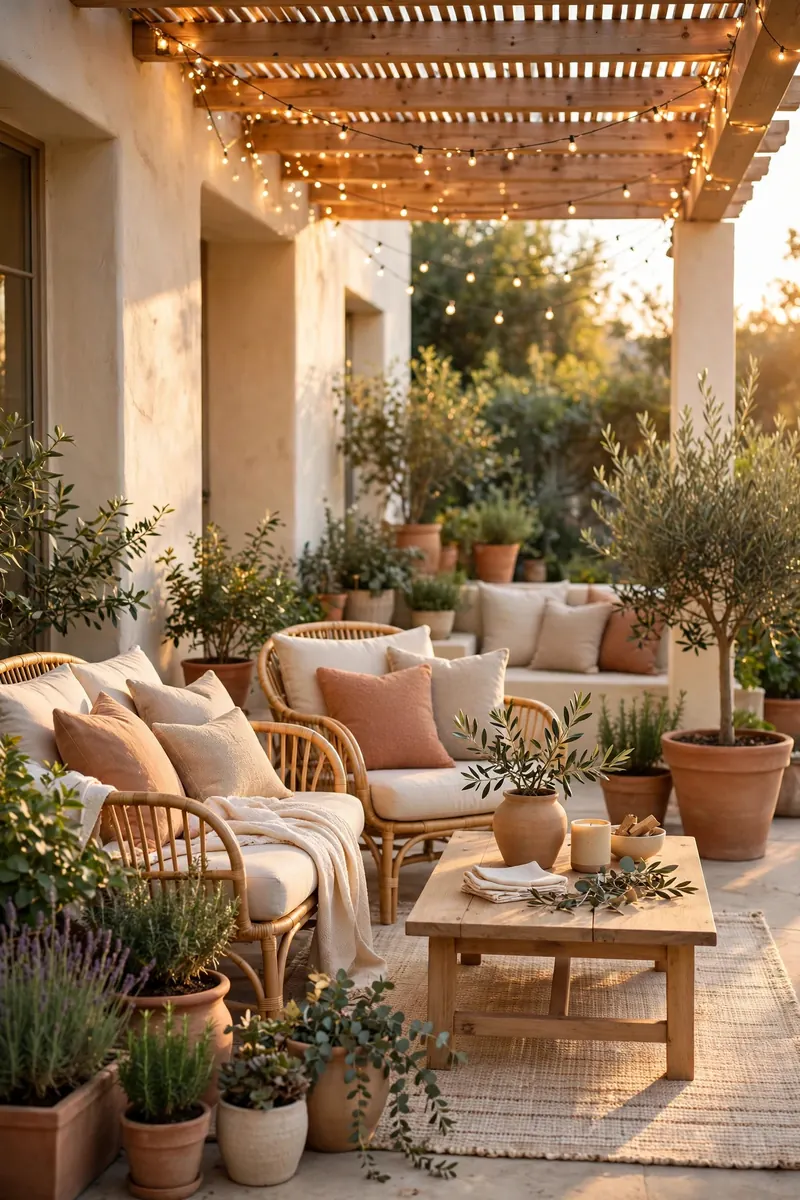
<!-- PINTEREST HERO IMAGE: Vertical 1000x1500 lush small balcony garden at golden hour, railing planters overflowing with herbs, terracotta pots of cherry tomatoes and petunias, string lights glowing, city view beyond, bold text overlay "Small Balcony Garden Ideas" -->
Your balcony is a garden waiting to happen
A balcony garden is the highest-yield square footage in a small home. A 4-by-10-foot balcony — 40 square feet, smaller than a parking space — can hold 20 to 30 pots of herbs, salads, and flowers without ever touching the floor, because balconies have something indoor plants don't: railings, walls, and real sun. Beginners often assume they need a yard to garden. What you actually need is 4 to 6 hours of light, containers that drain, and plants matched to your conditions — all of which a balcony provides better than most windowsills.
This guide is specifically for people starting from zero: no raised beds, no digging, no prior plant knowledge. Every idea below works in containers, on a rental-friendly budget, and in the real constraints of balcony life — weight limits, wind, neighbors below, and a landlord who inspects the railing. If you want the decor and layout side, pair this with our small balcony ideas for styling; if you have a ground-floor space instead, see patio decor ideas for small backyards.
> *Affiliate disclosure: Roomora is reader-supported. When you buy through links on this page, we may earn an affiliate commission at no extra cost to you.*
Know your balcony before buying anything
1. Map your sun in hours, not guesses
Sun is the single variable that decides what will live on your balcony. Watch your balcony for one full day and log the hours of direct sun — not bright light, actual sun hitting the floor. Full sun means 6+ hours, part sun means 3 to 6, shade means under 3. Most beginner plant failures are sun mismatches: tomatoes in shade, ferns in blazing afternoon sun.
North-facing balconies are the shadiest; south-facing get the most sun; east gets gentle morning light; west gets harsh afternoon heat. Write it down. When a plant tag says "full sun," compare it to your actual number, not your hope.
2. Check the wind and weight realities
Balconies are windier than ground level — often much windier above the third floor. Wind dries soil fast, snaps tall stems, and tips light pots. Before buying tall plants, hold a hand out on a breezy day: if it's uncomfortable, your plants feel it too. Plan for shorter, bushier plants, heavier pots, and some wind screening (a bamboo screen or dense trailing plants on the railing help enormously).
Weight matters too. Saturated soil is heavy — a 12-inch terracotta pot can weigh 25 to 35 pounds after watering. Keep the heaviest containers near load-bearing walls, never against railing edges, and if your building has posted balcony weight limits, respect them. Lightweight fabric grow bags are your friend on upper floors.
3. Confirm drainage rules with your building
Drainage holes are non-negotiable for plant health, but water dripping onto the neighbor's balcony below is a fast track to complaints. The fix is simple: every pot gets a saucer, and every saucer gets emptied — or use self-watering planters with reservoirs. Never drill through balcony floors, and never let fertilizer runoff stain shared surfaces. A quick check of your lease or building rules now saves a confrontation later.
Containers: what actually works on balconies
4. Start with 10–12 inch pots, not tiny ones
Small pots are the number-one beginner trap. A 6-inch pot dries out in hours on a sunny balcony and gives roots no room, which means constant watering and stunted plants. Pots 10 to 12 inches wide and deep hold moisture longer, buffer temperature swings, and let you grow real plants — a cherry tomato, a bush of basil, a pepper plant. Bigger pots are genuinely easier, not harder.
5. Railing planters multiply your space for free
The railing is free real estate. Railing planters that hook over the rail hold herbs, trailing flowers, and strawberries without using a square inch of floor. Measure your railing width and depth before buying — rails vary from 2 to 6 inches wide, and a planter that doesn't fit securely is a hazard. Choose models with adjustable brackets and drainage holes, and always place a drip tray underneath.
6. Use fabric grow bags for lightweight, cheap volume
Fabric grow bags cost a fraction of ceramic pots, weigh almost nothing empty, fold flat for winter storage, and — the real benefit — air-prune roots, which prevents the circling root-bound mess plastic pots create. They dry out faster than plastic, so they're best for plants you water often anyway (vegetables, herbs) and less ideal for forgetful waterers. Sizes: 5-gallon for tomatoes and peppers, 3-gallon for herbs and greens.
7. Vertical planters and pocket gardens for tiny footprints
When floor space is under 30 square feet, go vertical. Tiered corner planters, hanging baskets from the ceiling or wall brackets, and fabric pocket planters on the wall turn one square foot of floor into six square feet of growing area. Herbs and trailing plants (strawberries, nasturtiums, trailing rosemary) thrive in vertical setups; heavy root vegetables do not. Anchor everything — a falling tiered planter is a serious liability on an upper balcony.
Soil and feeding: the boring part that decides everything
8. Use potting mix, never garden soil
Garden soil compacts in containers, suffocates roots, and brings weeds and pests. Bagged potting mix — peat or coco-coir based with perlite or vermiculite — is engineered to stay loose and drain in a pot. For most balcony plants, a standard all-purpose potting mix works; for succulents and Mediterranean herbs (rosemary, thyme, lavender), mix in extra perlite or coarse sand for sharper drainage.
9. Feed lightly and on schedule
Potting mix nutrients wash out with watering in 4 to 6 weeks, so container plants need feeding. A balanced slow-release granular fertilizer mixed into the soil at planting covers most of the season with one application — the beginner-proof option. For heavy feeders like tomatoes, add a liquid feed every two weeks once fruit sets. More is not better: over-fertilizing burns roots and produces leggy, tasteless growth. Follow the package rate, not your enthusiasm.
10. Mulch the tops of your pots
A 1-inch layer of mulch (bark chips, straw, or even pebbles) on each pot cuts evaporation dramatically, keeps soil from splashing onto leaves during watering, and makes pots look finished. On a windy, sunny balcony this single step can be the difference between watering once a day and twice.
Watering: the skill that makes or breaks it
11. Water deeply, then check before watering again
The beginner pattern is a daily sprinkle — enough to wet the top inch, never enough to reach roots. Instead: water until it flows from the drainage holes, then don't water again until the top 1 to 2 inches of soil are dry (poke a finger in; meters are optional). In summer heat this may be daily; in spring, twice a week. Plants die more often from constant sogginess than from occasional dryness.
12. Water the soil, not the leaves — and water mornings
Wet foliage invites fungal disease, especially in humid climates and on crowded balconies with poor airflow. Direct water at the soil surface, morning is ideal so leaves dry quickly and plants face the heat of the day hydrated. A long-spout watering can reaches under dense foliage; drip irrigation kits with a timer are the upgrade that lets you travel without hiring a plant sitter.
13. Group pots by thirst
Put the thirsty plants (basil, mint, lettuce) together and the drought-tolerant ones (rosemary, lavender, succulents) together. Mixed groupings mean someone is always getting the wrong amount of water. This is the simplest watering system there is, and it works.
Beginner plants that actually survive balconies
14. Herbs: the highest success rate of anything
Start here, not with vegetables. Basil, mint, parsley, chives, and oregano germinate or transplant easily, tolerate beginner mistakes, and pay you back in the kitchen within weeks. Mint deserves its own pot — it will strangle neighbors. One basil plant in a 10-inch pot yields enough leaves for regular cooking all season. Fresh herbs are also the fastest way to make the small kitchen feel connected to the balcony.
15. Cherry tomatoes: the one vegetable worth starting with
Full-size tomatoes are demanding; cherry tomatoes are forgiving. One plant in a 5-gallon container, a sturdy cage or stake, full sun, and consistent watering produces handfuls of fruit for months. Consistent watering matters more than anything — irregular watering causes blossom-end rot and splitting. If your balcony gets under 5 hours of sun, skip tomatoes entirely and grow greens instead.
16. Salad greens for shade and quick wins
Lettuce, arugula, spinach, and Asian greens grow in 3 to 4 hours of sun, mature in 30 to 45 days, and can be cut-and-come-again (harvest outer leaves, the plant keeps producing). They bolt — turn bitter and flower — in heat, so they're spring and fall crops on sunny balconies, summer crops on shady ones. Shallow, wide containers work fine; roots stay near the surface.
17. Flowers that earn their keep
Marigolds, nasturtiums, petunias, and zinnias are beginner-proof, bloom for months, and — the practical part — attract pollinators to your tomatoes and peppers. Nasturtiums are edible, trail beautifully from railing planters, and tolerate poor soil. Deadhead spent blooms (pinch them off) weekly to keep flowers coming instead of going to seed.
18. Pollinator-friendly picks for windy balconies
Wind-exposed balconies need low, tough plants: lavender, sedum, trailing rosemary, and compact salvia handle gusts and still feed bees. Avoid tall, top-heavy flowers (sunflowers, delphiniums) unless you can stake them to something structural. A lavender pot by the door is also a natural mosquito deterrent — not a miracle, but a pleasant bonus.
Small upgrades that pay off
19. A simple drip kit beats a watering can in July
By midsummer, daily hand-watering gets old and travel becomes plant roulette. A gravity-fed or tap-connected drip irrigation kit with a battery timer costs less than replacing dead plants once, waters at dawn automatically, and delivers water to the soil — not the leaves. Start with a kit sized for 10 to 20 pots; installation is a weekend project in the beginner DIY category.
20. Compost your balcony waste in a small bin
Spent plants, dead leaves, and kitchen scraps (not meat or dairy) can go into a compact bokashi bucket or small tumbler on the balcony — no smell when managed right, and free soil amendment in weeks. It closes the loop and cuts your potting-mix bill. Keep the bin sealed and balanced; a soggy, anaerobic bin is what gives composting a bad name.
Beginner mistakes to avoid
Buying plants before knowing your sun. This is the mistake behind most dead balcony gardens. Map the light first, buy second.
Cramming pots with no airflow. Balconies already have limited air circulation between railing and wall. Leave 2 to 3 inches between pots; crowded, damp foliage is a fungal buffet.
No saucers under drainage holes. One rainy week of fertilizer-stained runoff and your downstairs neighbor becomes your enemy. Saucers are cheap insurance.
Choosing plants for the photo, not the conditions. That lush fern needs humidity and shade; your west-facing concrete balcony in August will crisp it in a week. Match the plant to the balcony you have.
Starting too big. Ten pots you can water properly beat thirty you can't. Add plants after a month of success, not before.
Ignoring the wind. Tall, leggy plants on an exposed balcony snap, tip, and dry out. Go short, bushy, and anchored.
Forgetting renters' rules. No drilling into railings or walls without permission, no permanent structures, nothing that stains. Everything in this guide is reversible — keep it that way, and check our renter-friendly decor ideas for more no-damage approaches.
Frequently asked questions
How much sun does a balcony garden need?
Most vegetables and flowering plants need at least 4 to 6 hours of direct sun; herbs like mint, parsley, and chives manage with 3 to 4. Below 3 hours, stick to shade-tolerant greens, ferns, and begonias. Measure your actual hours across a full day before choosing plants — it's the single most predictive step.
What are the easiest plants for a total beginner?
Herbs (basil, mint, chives, parsley), cherry tomatoes, lettuce, marigolds, and nasturtiums. They germinate readily or transplant without shock, tolerate imperfect watering, and show visible progress fast — which keeps beginners motivated. Avoid fussy plants like blueberries, full-size tomatoes, or anything labeled "needs consistent moisture" until year two.
How often should I water balcony plants?
When the top 1 to 2 inches of soil are dry — typically daily in summer heat, every 2 to 3 days in spring and fall. Always water deeply until it drains from the bottom; shallow daily sprinkles create weak surface roots. Windy and upper-floor balconies dry out faster, so check more often there.
Can I garden on a north-facing or fully shaded balcony?
Yes, with the right plants: lettuce, spinach, arugula, mint, parsley, chives, ferns, begonias, impatiens, and hostas all tolerate shade. Skip fruiting plants entirely — tomatoes, peppers, and strawberries need sun you don't have. Shade gardens actually need less watering, which is a genuine advantage.
How do I keep my balcony garden from bothering neighbors?
Use saucers under every pot, choose drip irrigation or careful hand-watering over overhead spraying, avoid strong-smelling fertilizers, and secure everything against wind so nothing falls. Keep plants trimmed back from shared dividers and railings. A tidy, contained garden rarely draws complaints.
Do I need to bring plants inside for winter?
It depends on your climate and the plant. Tropicals and most herbs die at frost; hardy perennials like lavender, sedum, and chives survive winter in pots in mild climates but need insulation (bubble wrap around pots, mulch on top) where it freezes hard. Annuals (basil, tomatoes, petunias) are done for the year — compost them and start fresh in spring.
Keep going
A balcony garden pairs beautifully with a balcony you actually want to sit in — see small balcony ideas for layout and seating, and patio decor ideas for small backyards if you also have ground-level space. When harvest season hits, your herbs will want a home in an organized small kitchen.
Get the Sunday reset: one practical home idea in your inbox every week — subscribe free here. No spam, ever.
Pin title ideas
- 20 Small Balcony Garden Ideas for Beginners (Start This Weekend)
- The Easiest Balcony Garden Plants That Actually Survive
- Small Balcony, Big Harvest: Beginner Container Gardening Guide
- 7 Balcony Gardening Mistakes Killing Your Plants
- How to Start a Balcony Garden With Zero Experience