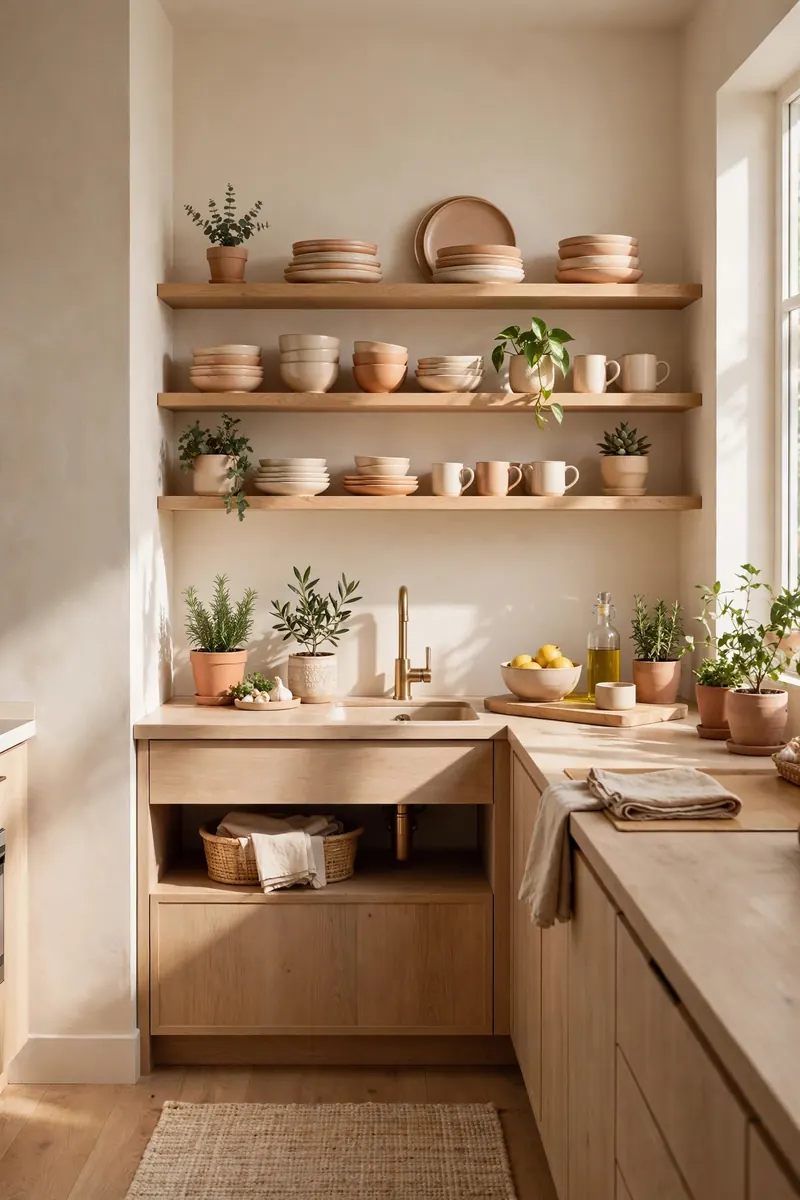
Why small kitchens feel chaotic
Small kitchens don't fail from lack of space — they fail from lack of system. Every item needs a home, and every home needs a reason. When each zone of your kitchen has one job, even a galley kitchen can cook like a big one. These ideas are about working smarter with the cabinets you have.
Zone your kitchen
1. Create cooking zones
Divide the kitchen into stations: prep (near the sink and cutting boards), cooking (near the stove with oils, spices, utensils), and storage (pantry goods, bulk items). Keep each zone's tools within arm's reach of where you use them. You'll stop crossing the kitchen twenty times per meal.
2. Store by frequency, not category
Daily items live between knee and eye level. Weekly items go higher or lower. Rarely used appliances (bread maker, fondue set) go to the hardest-to-reach spots — or out of the kitchen entirely. This one rule eliminates most kitchen frustration.
3. Give the coffee/tea station its own corner
Mugs, kettle or machine, filters, sweeteners — group them on one small tray or shelf section. Morning routines get faster, and the rest of the counter stays clear. A tray keeps it looking intentional instead of cluttered.
Cabinet upgrades that add space
4. Add shelf risers inside cabinets
A $10 wire riser doubles the usable surface of any cabinet shelf. Plates stack below, bowls or mugs sit on top. This is the single cheapest way to add "shelf space" without renovating.
5. Install pull-out cabinet organizers
Deep lower cabinets swallow items whole. Sliding pull-out shelves or baskets bring the back of the cabinet to you. Measure your cabinet interior before buying — most are standard widths.
6. Use the inside of cabinet doors
Mount slim racks or adhesive hooks inside doors for spices, wraps, measuring cups, or cleaning supplies. It's hidden storage that costs almost nothing and uses truly dead space.
7. Add a tension rod under the sink
A spring tension rod across the under-sink cabinet holds spray bottles by their triggers, freeing the floor of the cabinet for bins. The under-sink area is usually the most wasted space in a kitchen.
8. Decant dry goods
Flour, sugar, rice, pasta, and cereal in uniform airtight containers stack neatly, stay fresh longer, and let you see at a glance what needs restocking. You don't need to decant everything — start with the bulky bags that flop over.
Drawer systems
9. Use drawer dividers everywhere
Junk drawers happen because drawers have no structure. Adjustable bamboo or plastic dividers turn one chaotic drawer into six organized compartments. Do the utensil drawer, the gadget drawer, and the "everything" drawer.
10. File lids vertically
Pot lids and cutting boards stored flat waste space and topple. A simple vertical file organizer (or a tension rod setup) stores them upright like files. You'll grab the right lid the first time, every time.
11. Corral the plastic containers
Match every container to a lid, recycle the orphans, and store them nested with lids filed vertically beside them. If a container hasn't been used in six months, let it go. Container chaos is optional.
Countertop rules
12. Keep counters 80% clear
The fastest way to make a small kitchen feel bigger: remove everything except daily essentials (coffee setup, knife block or strip, one cutting board). Appliances you use weekly live in cabinets, not on the counter. Clear counters also mean faster cleanup.
13. Go up with a wall-mounted rail
A stainless rail with S-hooks on the backsplash holds utensils, mugs, or small pans — freeing a full drawer and keeping tools visible. This is standard in professional kitchens for a reason.
14. Use a magnetic knife strip
A wall-mounted magnetic strip replaces a bulky knife block and keeps sharp tools safely out of drawers. Mount it near your prep zone at a comfortable height.
15. One in, one out for gadgets
Small kitchens can't absorb unitaskers. Before a new gadget earns counter or cabinet space, an old one has to leave. Be ruthless with the avocado slicer and the third spatula.
Vertical and hidden space
16. Store above the cabinets
The gap above wall cabinets fits large, rarely used items: serving platters, seasonal bakeware, the turkey roaster. Use attractive baskets or bins so it looks intentional, not dusty.
17. Hang pots from a ceiling or wall rack
If cabinet space is truly maxed, a hanging pot rack frees an entire cabinet. Keep it to the pans you actually use weekly — display storage should earn its visual space.
18. Use the side of the fridge
Magnetic shelves, hooks, and paper towel holders turn the fridge side into a mini command center. It's especially useful in galley kitchens where wall space is scarce.
Frequently asked questions
How do I organize a very small kitchen with no pantry?
Zone aggressively: daily items at eye level, decant bulky goods into stackable containers, use door interiors and vertical wall space, and keep counters 80% clear. A rolling cart can act as a portable pantry for overflow.
What is the best way to organize kitchen cabinets?
Store by frequency of use, add shelf risers to double surfaces, use pull-outs in deep cabinets, and put shelf liner down so items don't slide. Group like with like — baking together, spices together, daily dishes together.
How do I keep my kitchen counters clutter-free?
Decide your 3–4 daily essentials and store everything else. Use trays to corral the keepers (coffee station, cooking oils) so they look intentional. The rule is simple: if you didn't use it today, it lives in a cabinet.
Keep going
Kitchen systems pair perfectly with pantry systems — our pantry organization ideas that actually work cover zones, bins, labels, and layouts for the food storage side of your kitchen.