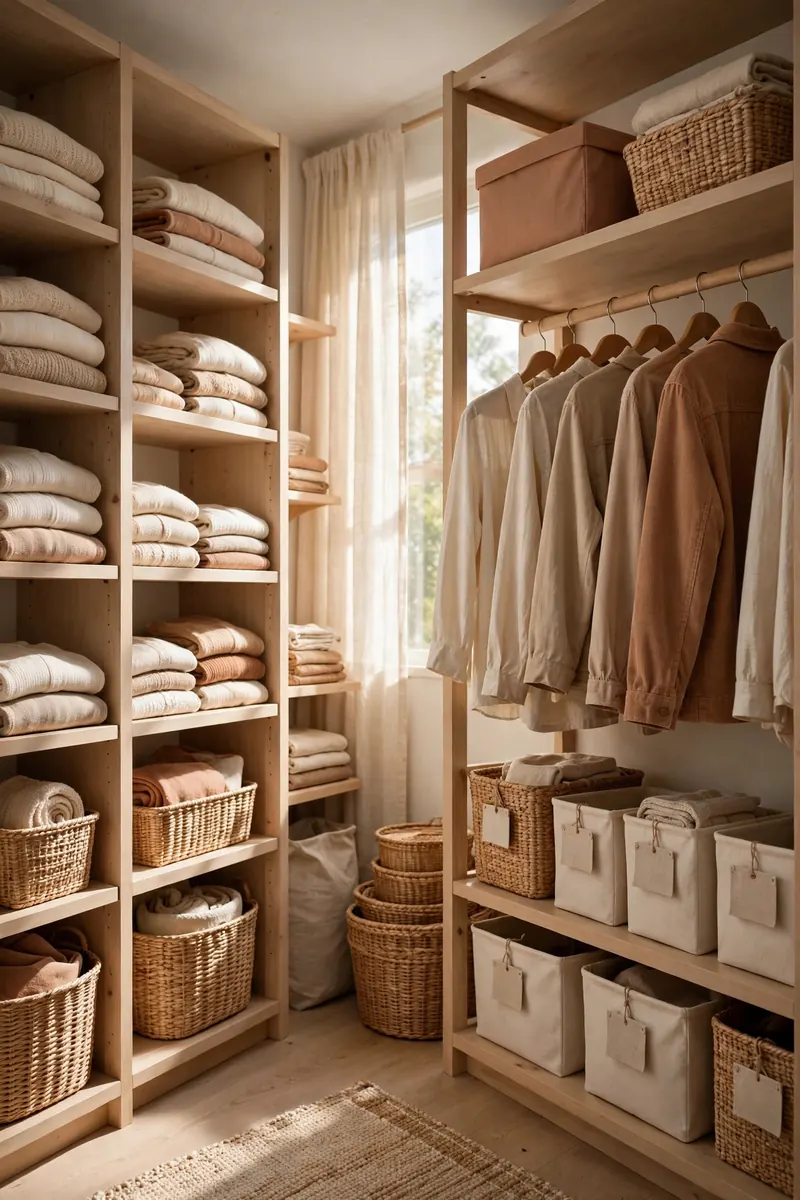
The laundry room problem
Laundry rooms are where good intentions go to pile up. The room is usually small, often windowless, and tasked with an absurd number of jobs: sorting, washing, drying, folding, ironing, stain-treating, and storing every cleaning supply in the house. Without systems, it becomes a holding area for unfolded clothes, half-empty detergent bottles, and that basket of "I'll deal with it later" that's been there since March.
An organized laundry room isn't about making laundry fun — it's about making it fast. Every minute spent hunting for the stain remover or re-sorting a mixed pile is wasted time on a chore nobody enjoys. These sixteen ideas build a room where everything has a place, the workflow actually flows, and the dreaded chair-drobe (the chair where clean clothes live for weeks) becomes unnecessary. Most cost under $30.
Sorting systems: stop the pre-wash chaos
Sorting is where laundry efficiency starts. A good system means you never stand in front of the machines wondering what goes in next.
1. Use a multi-compartment rolling hamper
A three or four-compartment rolling hamper (lights, darks, delicates, towels) turns sorting into a background task — clothes get sorted when they're tossed in, not on laundry day. The rolling part matters: when a compartment is full, you wheel the whole unit to the machine instead of carrying armloads. Label each compartment; unlabeled sorters become single-compartment hampers within weeks as everyone defaults to the nearest slot.
2. Add a "special care" bag for delicates and hand-wash
Delicates, hand-wash items, and "check the pocket first" clothes need their own stream. A mesh bag hung on a hook beside the main hamper catches these before they end up in a regular load. This prevents the two classic laundry disasters: the wool sweater that went through hot wash, and the pen left in a pocket that redecorated an entire load. The bag is the cheapest insurance in the laundry room.
3. Keep a stain-treatment station by the hamper
Stains set with time — treating them when clothes come off beats treating them on laundry day. A small basket or caddy with stain remover, a soft brush, white cloths, and a spray bottle of diluted dish soap lives right beside the hamper. The rule: if you notice a stain when undressing, it goes to the treatment station, not the hamper. Five seconds now saves a ruined garment later.
Detergent and supply organization
Laundry supplies multiply: detergent, softener, dryer sheets, scent boosters, bleach, stain removers, wool dryer balls. Contain them.
4. Decant into uniform dispensers
Bulky detergent jugs and boxes eat shelf space and look chaotic. Decanting powder into a wide-mouth jar, liquid into a pump dispenser, and pods into a lidded container does three things: saves space (uniform containers pack tighter), makes levels visible (you see when you're running low), and looks intentional. Label everything — laundry pods in an unmarked container are a child-safety hazard, not just an organization fail. Keep original packaging with safety instructions stored elsewhere.
5. Mount supplies on the wall, not the shelf
Laundry room shelves are shallow and limited. Wall-mounted wire racks, pegboards, or simple shelves above the machines hold detergent, dryer sheets, and tools without consuming counter space. A pegboard is the most flexible option — hooks rearrange as your supply collection changes, and small baskets hook on for loose items. Mount it where you can reach everything while standing at the machines; supplies stored where you can't reach them might as well not exist.
6. Corral small items in labeled bins
Dryer balls, lint roller refills, sewing kits for quick repairs, spare buttons — the small stuff vanishes into drawers. One labeled bin per category on a shelf or in a wall-mounted basket keeps them findable. The ironing supplies (spray starch, distilled water, pressing cloth) get their own bin too. Small-item bins are boring and transformative in equal measure.
Vertical storage: use the walls
Laundry rooms are small but usually have generous wall space above and beside the machines. Claim all of it.
7. Install shelves above the machines
The wall above the washer and dryer is the laundry room's prime real estate — eye-level, arm's-reach, currently empty in most homes. Two sturdy shelves hold decanted detergent, folded linens, and the supply bins from idea #6. Leave enough clearance to open top-loading washer lids fully (measure before mounting). If the machines are front-loaders, you can mount lower and add a countertop across both machines for a folding surface — the single best upgrade for front-loader laundry rooms.
8. Add a wall-mounted drying rack
Not everything goes in the dryer: delicates, activewear, anything that shrinks. A wall-mounted accordion drying rack folds flat when not in use and extends to hold a full load of hang-dry items. Mount it on the wall opposite the machines or above a utility sink. It's dramatically better than a freestanding rack that eats floor space and gets in the way — the wall-mounted version disappears when folded.
9. Hang the ironing board on the wall or door
Ironing boards are long, awkward, and always in the way. A wall-mounted or over-door ironing board holder stores it vertically in inches of space. If you iron rarely, consider whether you need a full-size board at all — a tabletop ironing pad on the folding counter handles occasional touch-ups and stores in a drawer. Match the solution to your actual ironing frequency, not your aspirational one.
10. Use the back of the door for tools
The laundry room door (or a cabinet door) holds a surprising amount: a slim organizer for lint rollers, dryer sheets, and stain sticks; hooks for the step stool; a hanging bag for lost socks. Over-door organizers need no drilling and install in seconds — ideal for renters. The lost-sock bag deserves special mention: every household generates single socks, and a designated bag beats the windowsill collection most homes default to.
The folding and workflow zone
11. Create a dedicated folding surface
Folding on the bed means clean clothes migrate to the "chair-drobe" and stay there. A folding surface in the laundry room — a countertop over front-loaders, a wall-mounted drop-leaf table, or even a cleared shelf — keeps the workflow in one room: wash, dry, fold, put away. The surface doesn't need to be large; it needs to be clear. Clear it before every laundry day as part of the routine.
12. Sort folded laundry into labeled baskets by person or room
One basket per household member (or per destination: bedrooms, bathrooms, kitchen linens) turns "putting laundry away" from a multi-trip chore into a grab-and-deliver system. Fold directly into the baskets, then each person carries their basket to their room. Kids old enough to carry a basket are old enough to put their own clothes away — this is how the system sustains itself instead of depending on one person.
13. Keep hangers at the dryer, not in the closet
Clothes that go on hangers should go on hangers immediately — not draped over the dryer, not piled for later. A wall-mounted hanger holder or a simple rod beside the dryer keeps 10-15 empty hangers within arm's reach. Shirts hung straight from the dryer need less ironing (sometimes none), which is a double win. This only works if the hangers are actually there; a hanger holder that's always empty is just decor.
Small laundry rooms and closets
14. Stack the machines to reclaim floor space
If you have a top-loader and dryer side by side in a closet or tiny room, stacking them (with a manufacturer-approved stacking kit) frees half the floor footprint. The reclaimed space fits a rolling cart, a narrow shelving unit, or just breathing room. Only stack with the proper kit — improvised stacking is a safety hazard, not a life hack. Front-loaders are designed for stacking; most top-loaders are not convertible, so this mainly applies when buying or replacing machines.
15. Use a rolling cart in the gap
The 6-8 inch gap between machines (or between machine and wall) fits a slim rolling cart perfectly. Three tiers hold detergent, dryer sheets, stain supplies, and tools in a pull-out unit that vanishes when pushed back. This is the highest-value-per-inch storage in any small laundry room — dead gap space becomes a full supply station. Measure the gap before buying; carts come in 5, 6, 7, and 8-inch widths.
Maintenance: keep the system alive
16. Run the monthly 10-minute reset
Laundry rooms drift: supplies migrate, the lost-sock bag overflows, folding surfaces accumulate non-laundry items. Once a month, ten minutes: return stray items to their homes, check detergent levels, empty the lint trap area and the lost-sock bag (match or discard singles older than a month — be ruthless), and wipe down the folding surface. Tie it to an existing habit — the first laundry day of the month works. A maintained system never needs another overhaul.
More ideas you'll love
Frequently asked questions
How do I organize a very small laundry room or laundry closet?
Go vertical and use every gap: shelves above the machines, a wall-mounted drying rack, over-door organizers, and a slim rolling cart in the machine gap. Stack front-loaders if possible. In a closet laundry, every item needs a wall-mounted or door-mounted home because there's no floor to spare.
What's the best way to sort laundry efficiently?
A multi-compartment rolling hamper at the point where clothes come off — sorting happens at toss-in time, not on laundry day. Add a separate mesh bag for delicates and a stain-treatment station beside the hamper. The system works because it distributes a dreaded task across the week in five-second increments.
Should I decant laundry detergent?
Yes for the detergent you use daily — uniform dispensers save space, show levels at a glance, and look intentional. But keep original packaging with safety instructions stored elsewhere, and always label decanted containers clearly. Never decant into food containers or leave pods in unmarked jars where children might mistake them.
How can I make laundry day faster?
Three things: pre-sorted hampers (no sorting on laundry day), everything within arm's reach of the machines (no hunting for supplies), and folding immediately into labeled baskets by person. Most laundry-day time isn't washing — it's the friction around it. Remove the friction and the chore shrinks.
Where should I store laundry supplies in a small space?
Wall-mounted: pegboard, wire racks, or shelves above the machines. The rolling cart in the machine gap handles the rest. Keep daily-use items (detergent, dryer sheets, stain remover) at arm's reach of the machines; bulk backups and seasonal items go on higher shelves or elsewhere entirely.
How do I stop clean laundry from piling up unfolded?
Fold at the machine into labeled baskets by person or room, and make basket-delivery part of the routine — not a separate task for later. "Later" is where laundry goes to live permanently. The folding surface must be clear before laundry day starts, or folding gets deferred and the pile begins.
Keep going
Laundry systems pair with weekly cleaning schedules — both run on the same principle of small regular actions beating occasional overhauls. Build both and the house practically maintains itself.
Get the Sunday reset: one practical home idea in your inbox every week — subscribe free here. No spam, ever.